If you've researched solar for more than five minutes, you've run into the term net metering — and probably nodded along without being totally sure what it means. It's worth understanding, because it's one of the single biggest factors in how much a solar system actually saves you.
The good news: the core idea is simple. Here's what net metering is, how it works day to day, and why the details depend heavily on where you live.
The Simple Version: The Grid as Your Battery
A grid-tied solar system produces the most power in the middle of the day — often more than your home is using at that moment. At night, it produces nothing, but your home still needs power.
Net metering solves that mismatch. When your panels produce more than you're using, the surplus flows out to the utility grid and your utility credits you for it. When you need power the panels aren't making — at night, or on a cloudy afternoon — you pull from the grid and draw down those credits.
In effect, the grid acts like a giant battery you don't have to buy: you deposit power when you have extra and withdraw it when you're short. (This is why grid-tied systems don't need a home battery to be worthwhile — more on where batteries fit below.)
How It Works, Step by Step
- Your panels produce electricity. Your home uses what it needs in real time.
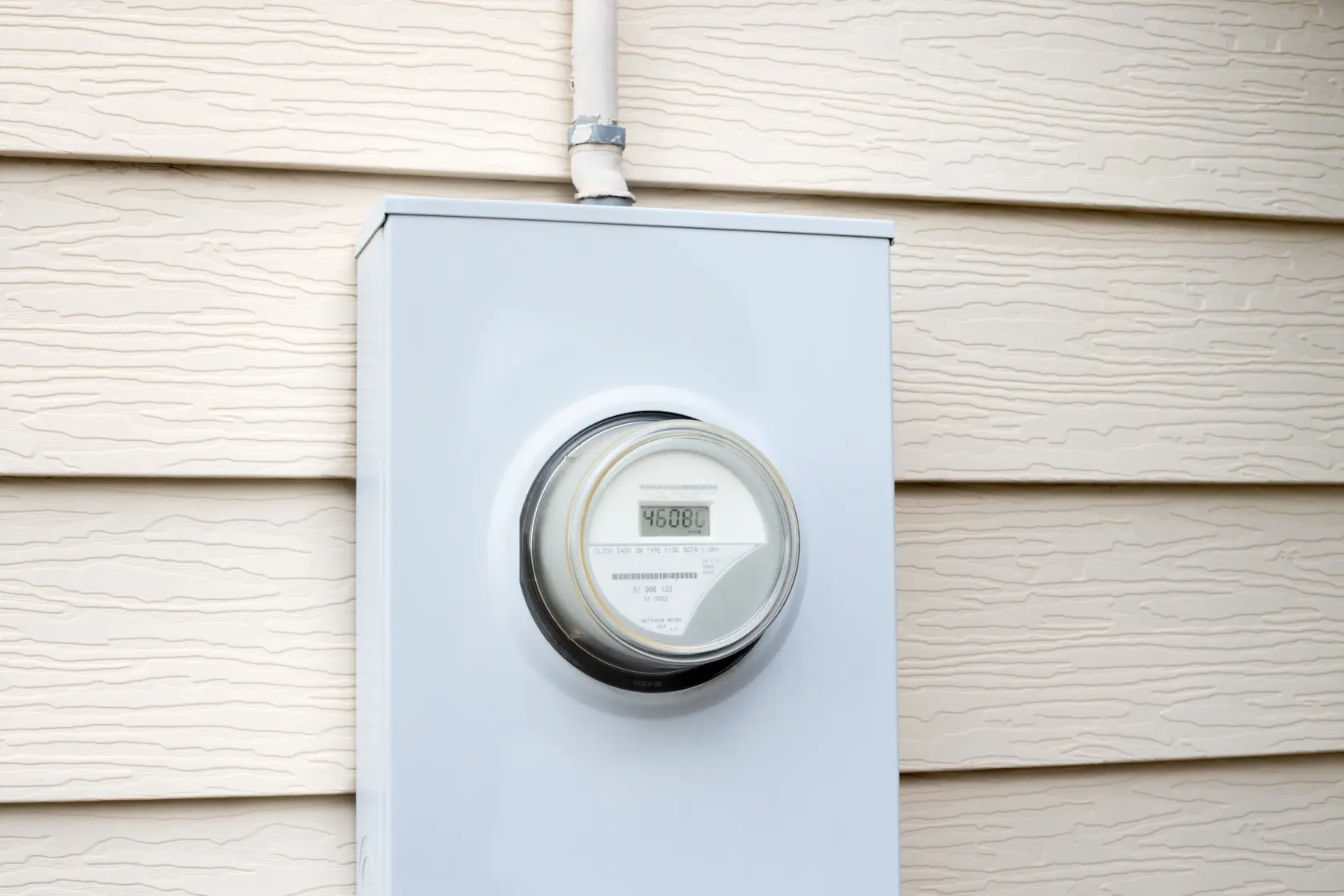
- Surplus flows to the grid. When you're producing more than you're using, the excess goes out to the utility, and your meter tracks it. Many homes have a bidirectional meter that literally records power flowing both ways.
- You earn credits. The utility credits your account for that exported power.
- You draw power back. At night or during low production, you pull from the grid and spend down your credits.
- You're billed on the "net." At the end of the billing cycle, you're charged for your net usage — total power used minus power you sent back. If you sent back as much as you drew, your energy charge can be close to zero.
That word — net — is where "net metering" gets its name.
Why Net Metering Matters So Much
Net metering is often the difference between solar being a strong investment and a mediocre one, for one reason: it determines how much your surplus power is worth.
Under the most favorable version — full retail net metering — every kilowatt-hour you export is credited at the same retail rate you'd pay to buy power. A kWh you send out in the afternoon fully cancels a kWh you pull back at night. That's the best-case scenario, and it's what makes many solar systems pencil out without a battery.
But not every utility offers full retail credit. Some credit exported power at a lower "avoided cost" or wholesale rate, meaning the kWh you send out is worth less than the one you buy back. When that's the case, your effective savings shrink, and the math shifts — sometimes toward using more of your own power on-site (with a battery) rather than exporting it.
Because net metering sets the value of your production, it flows directly into your payback period and your overall solar savings and cost picture.
The Big Catch: It Depends on Your State and Utility
Here's the part no honest guide can gloss over: net metering rules are set at the state and utility level, and they vary enormously. Two homeowners with identical systems in different states can have very different economics purely because of how their utility credits exported power.
The variables that differ from place to place include:
- Credit value — full retail rate vs. a reduced/avoided-cost rate.
- What happens to extra credits — some utilities roll credits forward month to month; some do an annual "true-up" and pay out (or zero out) any leftover balance once a year.
- Program structure — traditional net metering, "net billing," time-of-use crediting, or successor programs that replaced older net metering rules.
- Caps and deadlines — some programs have enrollment caps or grandfathering deadlines that make timing matter.
Because of that, the only way to know your real numbers is to look at your specific state and utility. We cover each state we serve in depth:
- Net metering in Florida
- Net metering in Massachusetts
- Net metering in Connecticut
- Net metering in Rhode Island
- Net metering in Colorado
- Net metering in North Carolina
Net Metering vs. "Net Billing"
You'll sometimes see the term net billing, which is worth knowing because several states have shifted toward it. The distinction, in plain terms:
- Net metering typically credits your exported energy at (or near) the full retail rate — a kWh out equals a kWh in.
- Net billing credits your exports at a separate, usually lower rate, while you buy grid power at the normal retail rate. The two prices aren't the same, so it generally rewards using your solar as it's produced more than exporting it.
Neither is inherently a dealbreaker — but which one your utility uses changes how a system should be designed and whether a battery makes sense.
Where Batteries Fit In
Net metering and home batteries solve the same problem — what to do with midday surplus — in two different ways. With net metering, you send surplus to the grid and pull it back later. With a battery, you store surplus at home and use it yourself after sunset or during an outage.
In areas with strong full-retail net metering, the grid is such a good "battery" that a home battery is mostly about backup power, not extra savings. Where export credits are lower, storing and using your own power can be worth more, tilting the value toward batteries. Our home battery comparison covers the options, and our guide on how solar panels work shows where each piece fits in the overall system.
How to Find Out What You'd Get
Your net metering terms come down to your utility and your state's current rules, and those can change over time as programs are revised. The most reliable way to know what your surplus is actually worth is to have it modeled against your specific utility and usage — which is exactly what belongs in a real project proposal rather than a generic estimate.
The Bottom Line
Net metering is the mechanism that lets the grid store your solar for you: you bank surplus when the sun's out and spend it down when it isn't, and you're billed on the net. When it's full-retail, it's a huge part of what makes grid-tied solar pay off. When it's reduced, the math shifts — often toward using more of your own power. Either way, it's one of the first things worth understanding about solar in your specific area.
If you'd like to know exactly how net metering would work for your home and utility, reach out to our team and we'll walk you through it.
Lunex Power installs solar panel systems and home battery storage across Florida, Massachusetts, Connecticut, Rhode Island, Colorado, and North Carolina. Get a free quote to see what the numbers look like for your home.