Back to Blog
Net Metering in Connecticut: How It Works and What Homeowners Should Know
Phil Huet
11 min read
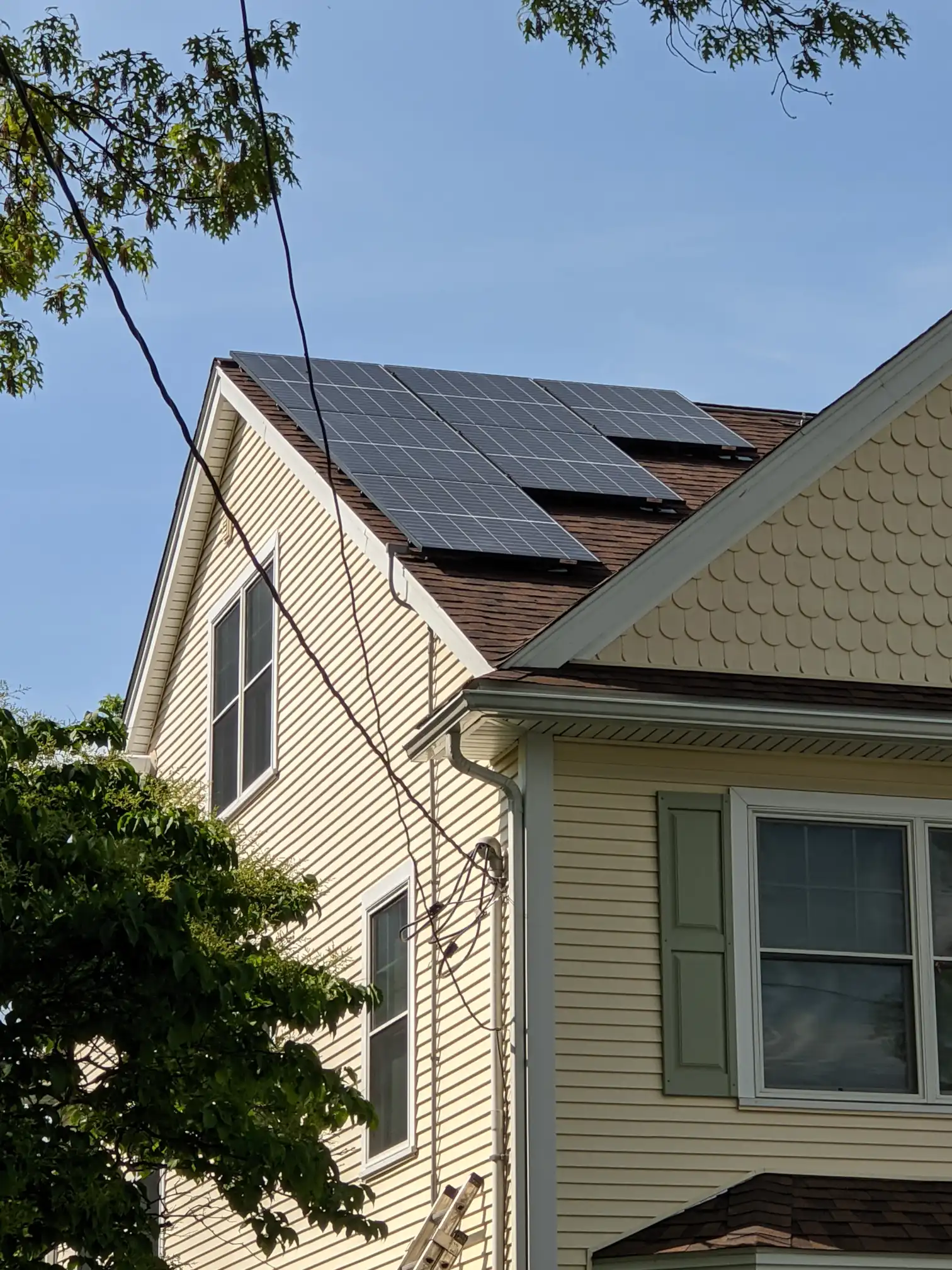
If you live in Connecticut, you already know your electricity bill is painful. Rates here average $0.28–$0.30/kWh in 2026 — roughly double the national average — and they've been climbing for years. That's exactly why solar makes so much financial sense in this state. The math is compelling precisely because what you're offsetting is so expensive.
What's less obvious is how the solar compensation program actually works. Connecticut no longer has traditional net metering. The old program quietly closed to new applicants in 2022 and was replaced by something called the Residential Renewable Energy Solutions (RRES) program. If you've been researching solar in Connecticut and keep seeing "net metering" everywhere, you're almost certainly looking at RRES — they're related, but they're not the same thing, and the differences matter.
Here's what you need to know.
What Replaced Net Metering in Connecticut?
The original net metering program was simple: export electricity to the grid, get credited at the full retail rate, no strings attached. In 2022, PURA — the Connecticut Public Utilities Regulatory Authority — replaced it with RRES, a more structured program designed to sustain 50–60 MW of solar deployment per year as part of Connecticut's push toward a 100% zero-carbon grid by 2040.
RRES isn't a step backward for most homeowners. In many respects the economics are comparable, and for some the 20-year locked-in term is actually an improvement. But it works differently — and there are two distinct tracks to choose between. Both are administered by Eversource (serving most of the state) and United Illuminating (UI, serving the New Haven and Bridgeport areas). Both lock you in for 20 years from enrollment.
Choosing the right track for your situation is one of the most important decisions you'll make when going solar in Connecticut.
The Two RRES Tracks
Track 1: The Netting Tariff
The Netting Tariff is the closer analog to old net metering, and it's the better fit for most homeowners.
Here's how it works: your solar system powers your home first. Any surplus beyond what you're using at a given moment flows to the grid and earns bill credits at the full retail rate — approximately $0.28–$0.30/kWh depending on your utility. Credits roll over month to month with no expiration until you close your account.
There's one charge that every new enrollee in 2026 needs to understand before signing anything: the Solar Energy Adjustment.
PURA sets this charge annually, and it applies to every kilowatt-hour your system produces — not just what you export, but all of it, including what you use in your own home. For 2026 enrollments, the rate is $0.0402/kWh. On a typical 10 kW system generating around 11,000 kWh per year, that's roughly $440/year as a line item on your bill.
That's real money, and it's the number that separates an honest proposal from an optimistic one. Any installer who doesn't factor it into your savings estimate is giving you an incomplete picture.
Two things soften the blow considerably:
Your Solar Energy Adjustment rate locks the moment you enroll. Whatever rate applies when your system gets its Permission to Operate is what you pay for the full 20-year term — no matter what PURA sets for future enrollees. The adjustment jumped from $0.005/kWh in 2025 to $0.0402/kWh in 2026 — an eightfold increase in a single year. Homeowners who enrolled last year are insulated from that. Homeowners enrolling now are locked at 2026's rate for two decades. If PURA raises it again next year, that's not your problem.
Your credit rate tracks retail — and that's actually good news. This is the part that's easy to misread. Your Netting Tariff credits aren't locked at today's specific dollar figure — they're tied to whatever the retail rate is at the time. So as Connecticut's electricity rates rise (and they will), your credits become worth more right along with them. What's locked in is your eligibility to receive retail-rate credits under this program for 20 years. That matters because PURA could restructure RRES for future enrollees — reducing the credit rate or switching to a lower avoided-cost rate — and it wouldn't touch you. You stay on your terms.
The one scenario where this works against you: if retail electricity rates somehow dropped significantly, your credits would be worth less. Given Connecticut's rate trajectory, that's more theoretical than likely.
Net it out: the effective credit rate for 2026 Netting Tariff enrollees comes to roughly $0.24–$0.26/kWh once the adjustment is factored in. That's lower than what earlier enrollees get — but it's still well above the national average retail rate, and against Connecticut's electricity prices, solar still pencils out clearly.
Track 2: The Buy-All Tariff
The Buy-All Tariff works very differently. Instead of your panels powering your home first, everything your system produces goes directly to the grid. Eversource or UI pays you a fixed rate on all of that generation — $0.3289/kWh for 2026 enrollees, locked for 20 years — and you buy all of your household electricity separately at normal retail rates.
On the surface, $0.3289/kWh for everything you produce sounds attractive, especially compared to the adjustment-reduced Netting credit. But the catch is that you're also buying back everything you consume at retail, and your home doesn't get the direct benefit of running on solar you generated.
It's also worth understanding what "locked for 20 years" means here versus under the Netting Tariff. With Buy-All, you're locked at a fixed dollar figure — $0.3289/kWh, full stop, for two decades. With Netting, your credits float with the retail rate, so you capture the upside if Connecticut's electricity prices keep climbing. Buy-All trades that upside for predictability. You always know exactly what your production is worth; you just don't benefit if rates rise significantly above what you locked in.
Buy-All makes the most sense for systems that are significantly oversized relative to household consumption — where there's a lot of excess production to sell — or for certain lease and PPA financing arrangements. For most homeowners with a system sized to their actual usage, Netting wins.
One other thing worth noting: the Solar Energy Adjustment doesn't apply to Buy-All. If you're evaluating a larger system with substantial export potential, it's worth running the numbers on both tracks before deciding. PURA is legally required to keep the Buy-All value substantially similar to the Netting Tariff overall, so they're designed to be genuine alternatives rather than one clearly dominating the other.
Which Utilities Offer RRES in Connecticut?
RRES runs through Connecticut's two investor-owned utilities:
Eversource serves the majority of the state — Hartford, most of Fairfield County, and large portions of New Haven and Middlesex counties — with over 1.2 million customers.
United Illuminating (UI) serves the greater New Haven and Bridgeport shoreline, including West Haven, Milford, Derby, Ansonia, Shelton, and Stratford. Now owned by Avangrid, UI processes applications through ui.com. One practical note: UI's interconnection process typically runs 2–4 weeks longer than Eversource's and requires a separate smart meter installation, so budget a little extra time if you're in UI territory.
Both utilities operate under the same PURA rules with the same Solar Energy Adjustment rate. If you're served by a municipal utility or electric cooperative, you're outside the RRES framework — confirm your provider's solar program directly before assuming these terms apply.
The 20-Year Lock-In — and Why It Matters
The 20-year enrollment term is the feature of RRES that most homeowners don't fully appreciate until they think it through.
When your system receives its Permission to Operate, both your credit rate and your Solar Energy Adjustment rate are frozen for 20 years. Future rate increases from the utility? Your credits are still valued at today's rate. Future Solar Energy Adjustment increases from PURA? You pay what you locked in, not the new rate.
The flip side: you're committed to whichever track you chose for two decades. There's no switching mid-term. That's why getting the Netting vs. Buy-All decision right at the start — based on your actual usage, your system size, and your specific situation — is worth taking seriously before you sign.
Battery Storage and the Energy Storage Solutions Program
Connecticut's battery incentive program — the Energy Storage Solutions (ESS) program — changed its structure on April 1, 2026, shifting from a large upfront payment to a smaller enrollment incentive combined with performance-based payments over 10 years.
Under the current structure, new standard installations receive an upfront enrollment incentive of $30/kWh, followed by annual performance payments of $300–$550/kW for years one through five and up to $130/kW for years six through ten, based on active dispatch performance during peak demand events. Grid edge customers — homes on constrained circuits that experience frequent or extended outages — qualify for a higher enrollment incentive of $130/kWh. Low-income households qualify for more generous terms as well. The cap is $16,000 per project.
The shift to performance-based payments means the total program value over 10 years can be comparable to the old structure — but it's earned over time rather than paid upfront, which changes how you think about the financial case for adding a battery.
There's also a Connecticut-specific reason batteries are worth considering alongside solar: the Solar Energy Adjustment applies to your total production, including power you self-consume. A battery doesn't eliminate that charge. What it does do is capture midday surplus that would otherwise export at the adjusted credit rate and redeploy it in the evening when you'd otherwise be buying from the grid at full retail. That self-consumption benefit is real — and worth modeling as part of your overall system design.
The ESS program is administered by the Connecticut Green Bank through Eversource and UI, and you don't need solar to participate. Batteries can be enrolled as standalone systems.
A Note on System Sizing
The Solar Energy Adjustment has a direct implication for how your system should be sized: bigger isn't better here.
Every kilowatt-hour your system produces gets hit with the $0.0402/kWh charge, including surplus that ends up exported to the grid at the adjusted credit rate. A system significantly oversized for your household consumption racks up more adjustment charges without proportionally more value to show for it.
The right target is a system sized to offset close to your actual annual usage — maximizing the self-consumed power that replaces full-retail electricity, and minimizing excess that bleeds off at lower effective rates. Your installer should be designing against your utility account history, not maximizing panel count.
The Bottom Line
Connecticut's RRES program isn't traditional net metering, but for most homeowners it delivers what net metering was always meant to deliver: a meaningful financial return on solar, protection against rising electricity costs, and a long-term framework you can plan around.
The Solar Energy Adjustment is the number to know. At $0.0402/kWh on all production in 2026, it's a real charge that deserves a line in every savings estimate you look at. It doesn't kill the case for solar in Connecticut — the state's high electricity rates see to that — but it does change the math, and it's risen sharply. Enrolling now locks that rate for 20 years; waiting risks locking in something higher.
One forward-looking note worth knowing: Connecticut's legislature passed Public Act 26-127 in 2026, requiring PURA to develop a successor program to RRES. The current program runs through end of 2027, with the successor expected to open in 2028. What that looks like — and how it compensates solar owners — is still being worked out. Homeowners who enroll in RRES now are protected by their 20-year term regardless. Those who wait until 2028 will be working under a framework that doesn't exist yet.
For a full picture of Connecticut's incentive stack — ESS battery incentives, Smart-E financing, property and sales tax exemptions, and what payback looks like in 2026 — see our Connecticut Solar Incentives guide.
Lunex Power installs solar panel systems and home battery storage across Connecticut, Massachusetts, Rhode Island, Florida, Colorado, and North Carolina. Trying to decide between the Netting and Buy-All tariffs? Talk to our team » and we'll help you figure out which one fits your home.