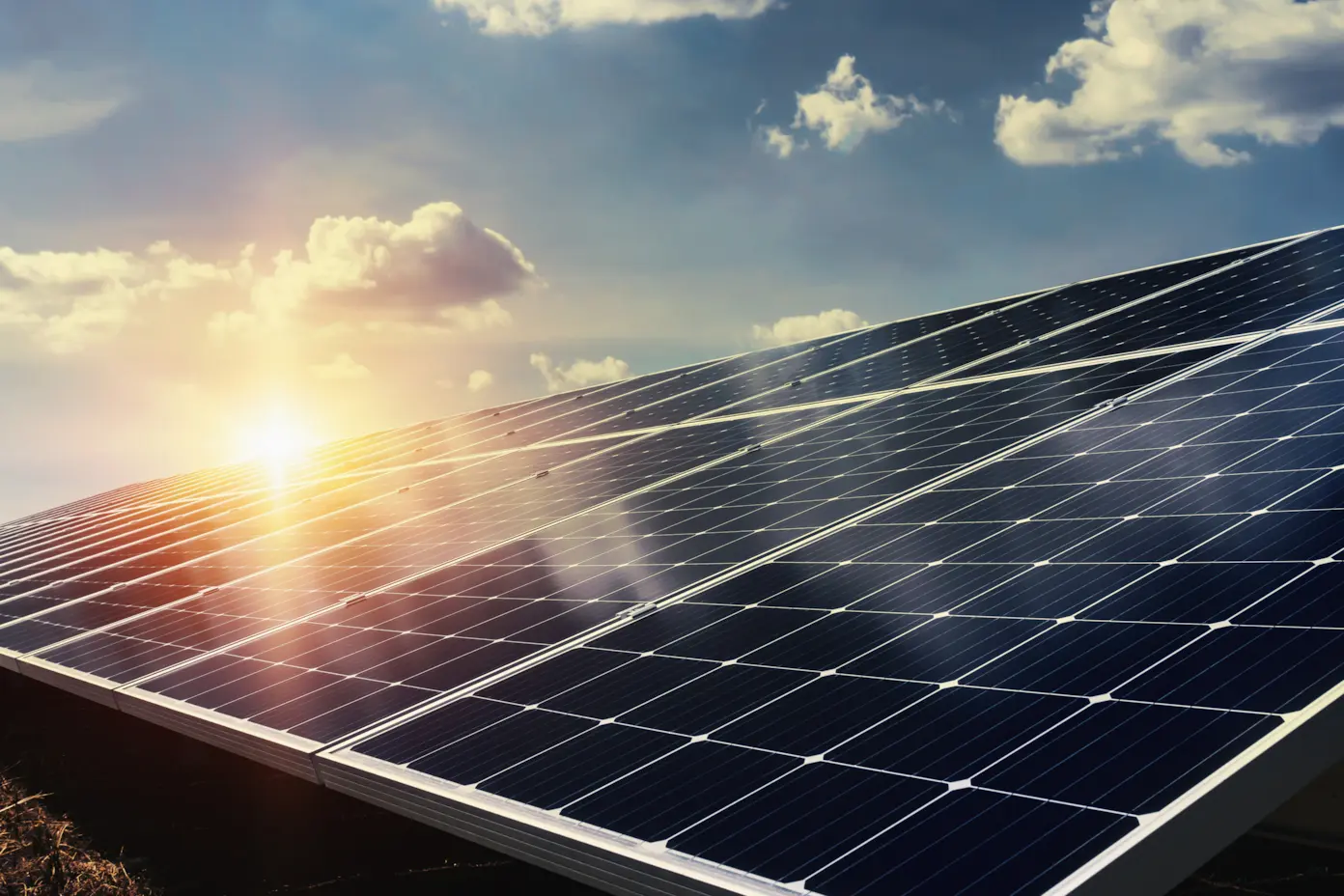
Solar panels are on more roofs than ever, but if you asked most people how they actually turn sunlight into the electricity running their refrigerator, you'd get a shrug. It seems like it should be complicated. It isn't — and understanding it makes every other decision about going solar (system size, inverters, batteries, net metering) a lot clearer.
Here's the whole thing in plain English, from a beam of sunlight to the power in your outlets.
The Core Idea: Turning Light Into Electricity
The heart of a solar panel is the solar cell, and it's made mostly of silicon — the same abundant material in sand and computer chips. Silicon is a semiconductor, which means it can be treated to control how electricity moves through it.
Here's what happens when sunlight hits that cell:
- Sunlight arrives as tiny packets of energy called photons.
- When a photon strikes the silicon, it knocks an electron loose from its atom.
- The cell is built in two layers, treated so that one side attracts electrons and the other releases them. That built-in imbalance creates an electric field — essentially a one-way street that pushes those loose electrons in a single direction.
- That directional flow of electrons is an electric current.
That's the entire trick. There's no combustion, no moving parts, no fuel — just light knocking electrons loose and a built-in electric field herding them the same way. This is called the photovoltaic effect ("photo" for light, "voltaic" for electricity), which is why you'll see panels called "PV" systems.
From Cell to Panel to Array
A single solar cell only produces a small amount of power, so they're wired together. Dozens of cells make up one panel (the rectangular unit you see on roofs), and multiple panels wired together make up your array. The more panels, the more electricity the system can produce — which is why system size is the biggest factor in what a solar system costs.
The Catch: Panels Make the "Wrong" Kind of Electricity
Here's the part most people don't realize. The electricity a solar cell produces is direct current (DC) — a steady one-way flow, the same kind a battery puts out.
But your home and the grid run on alternating current (AC) — electricity that rapidly switches direction. Your outlets, appliances, and the utility grid all expect AC.
So a solar system needs a translator, and that's the inverter. Its whole job is to convert the DC electricity your panels produce into the AC electricity your home can use. It's one of the most important components in the system — and there's more than one way to do it (a single central inverter, or small microinverters on each panel). We break down the differences in our inverter comparison.
Where the Power Goes
Once the inverter has turned your solar into usable AC, that electricity follows a simple order of priority:
- Your home uses it first. Anything running right now — AC, fridge, lights — draws from your solar before anything else.
- Extra power goes somewhere. On a sunny afternoon, your panels often produce more than you're using at that moment. That surplus doesn't vanish — it goes to one of two places:
- Back to the grid, where your utility credits you for it (that's net metering, below), or
- Into a battery, if you have one, to use later.
This is why a grid-tied solar home doesn't need to perfectly match production to usage minute by minute. The grid (or a battery) smooths out the difference.
What Happens at Night and on Cloudy Days
Panels only produce when light hits them, so production rises and falls with the sun — peaking at midday, tapering toward evening, and stopping at night. Clouds reduce output but don't stop it entirely, since panels still work on indirect light.
So how do you keep the lights on at night? It depends on your system type:
- Grid-tied systems pull from the utility grid when the sun's down, and bank credits when it's up.
- Battery (hybrid) systems store daytime surplus to use at night or during an outage.
- Off-grid systems rely entirely on batteries and careful sizing, with no utility to fall back on.
We compare these three setups in detail in off-grid vs. grid-tied vs. hybrid solar.
Net Metering: How the Grid Becomes Your Battery
For most homeowners, the grid itself acts like a giant, free battery — and the mechanism that makes that work is net metering.
When your panels send surplus power to the grid, your meter effectively runs backward and your utility credits you. When you pull power at night, you draw down those credits. Over a billing cycle, you're billed on the net — what you used minus what you sent back.
The exact rules and credit value vary by state and utility, which is why it's one of the biggest factors in your long-term savings. Here's a closer look using one example: how net metering works in Florida.
Where Batteries Fit In
A battery is optional on a grid-tied home, but it changes what the system can do. Instead of sending your midday surplus to the grid, you store it — then use it after sunset or, critically, during a power outage when a standard grid-tied system shuts off for safety.
Batteries add meaningful cost, so whether they're worth it depends on your goals (backup and independence vs. lowest-cost savings). Our home battery comparison walks through the major options and what they actually do.
What Makes One System Produce More Than Another
Two homes with the same number of panels can produce different amounts of electricity. The main factors:
- Sunlight hours — more usable sun means more production (though high electricity rates can make solar pay off even in cloudier states).
- Orientation and tilt — in the northern hemisphere, south-facing roofs at a moderate pitch generally produce the most.
- Shading — trees, chimneys, or nearby buildings that block midday sun cut output.
- Panel efficiency — how much of the sunlight hitting a panel it converts to electricity; premium panels convert a bit more.
- System size — more panels, more production.
A good installer accounts for all of this when designing a system for your specific roof and usage.
The Part That Makes Solar Reliable: Almost Nothing Moves
Here's the quietly impressive thing about how solar works: there are essentially no moving parts. Panels sit still and convert light. That's a big reason they're so durable and long-lived — quality panels are built to produce for 25 to 30 years or more, and they're tested to withstand serious weather, as we cover in do solar panels survive hurricanes and hail. Most systems also come with a monitoring app so you can watch your production in real time.
The Bottom Line
Strip away the jargon and solar is genuinely simple: sunlight knocks electrons loose in a silicon cell, an inverter converts that flow into the kind of electricity your home uses, your home draws what it needs, and the surplus goes to the grid or a battery. No fuel, no emissions, almost nothing moving — just light turned into power on your roof.
If you're wondering what all of this would look like on your specific home — the right size, the production, the numbers — reach out to our team and we'll put together a clear picture.
Lunex Power installs solar panel systems and home battery storage across Florida, Massachusetts, Connecticut, Rhode Island, Colorado, and North Carolina. Get a free quote to see what the numbers look like for your home.