Back to Blog
How Much Does Solar Cost in 2026? What Actually Determines Your Price
Phil Huet
6 min read
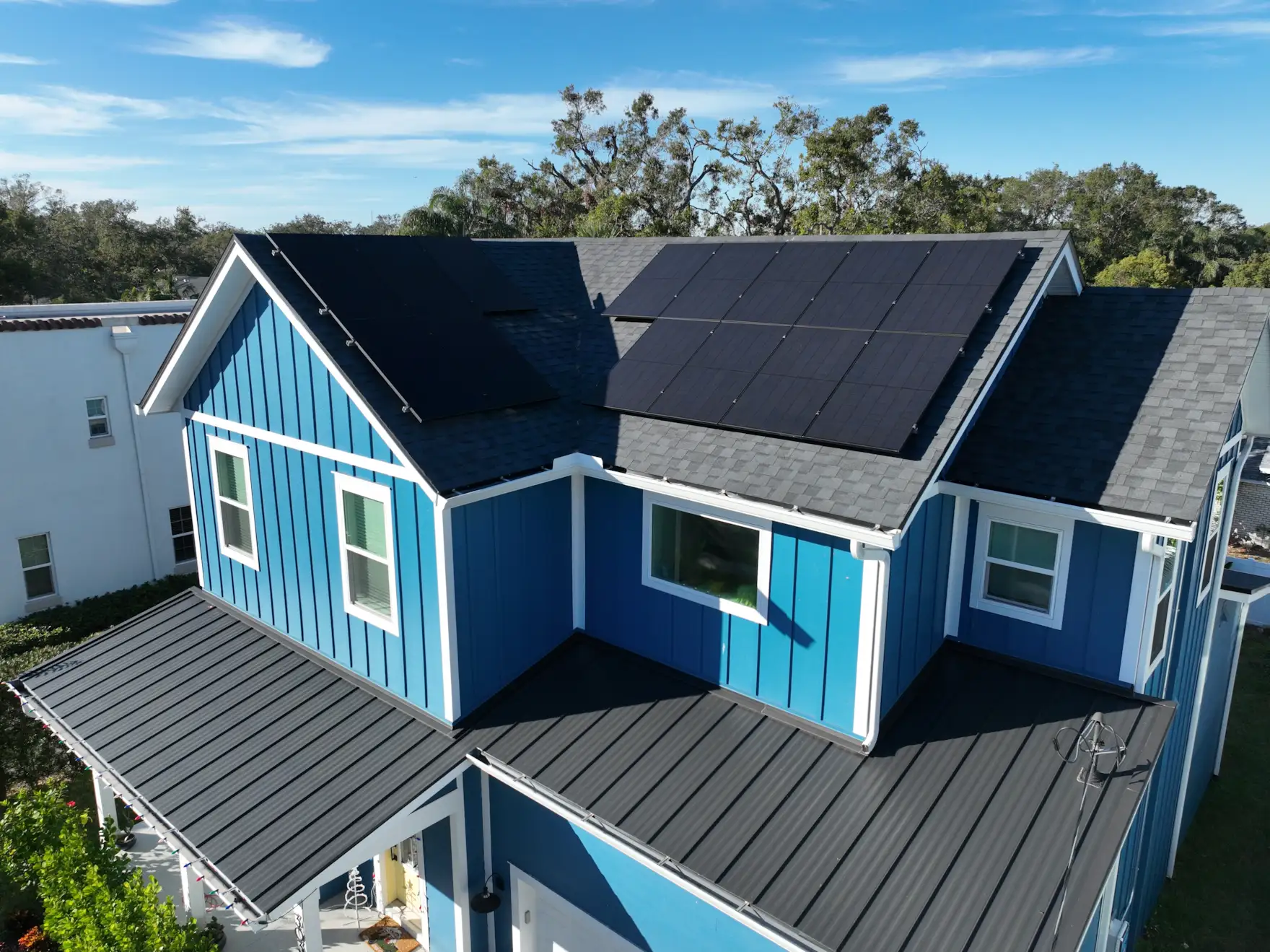
It's the first question almost everyone asks about solar, and the hardest to get a straight answer to. Search "how much does solar cost" and you'll get national averages built on someone else's roof, someone else's power bill, and someone else's utility. None of it tells you what solar costs for your home.
So instead of another average, here's how solar is actually priced — the factors that determine your number, what pushes it up or down, and why the figure that matters most isn't the sticker price at all. Once you understand the mechanics, any quote you get will make a lot more sense.
How Solar Is Priced
Solar systems are sized in kilowatts (kW), and the industry benchmarks pricing by cost per watt installed — the all-in price (equipment, labor, permitting) divided by the system's wattage. Nationally, residential solar commonly falls in the range of roughly $2.50 to $3.50 per watt installed, though it varies by market, installer, and project complexity.
Most homes need a system somewhere between 6 kW and 12 kW to offset the bulk of their electricity use. Put those together and a typical installed cost, before financing or incentives, looks roughly like:
- 6 kW system — around $15,000–$21,000
- 9 kW system — around $22,000–$31,000
- 12 kW system — around $30,000–$42,000
Treat these as ballpark ranges, not quotes — the whole point of this post is that your actual number depends on the specifics below. (These figures are for the solar system itself; battery storage is a separate cost, covered further down.)
What Moves Your Number Up or Down
Two houses on the same street can get very different quotes. Here's what accounts for the difference:
- Your electricity usage. This is the biggest lever by far. The more power you use, the larger the system you need to offset it — and system size is the single largest factor in total cost. Heavy AC use, a pool pump, electric heat, or EV charging all push the needed system size up.
- Equipment. Premium panels and inverters cost more than entry-level gear, but often carry better warranties and performance. The inverter architecture you choose affects both price and long-term reliability.
- Roof complexity. A simple, unshaded roof with open space is the cheapest to work on. Multiple roof planes, steep pitches, tile roofing, or shading obstacles all add labor and cost.
- Electrical work. If your electrical panel needs an upgrade to accommodate solar, that's an added cost — and one worth surfacing up front rather than discovering mid-project.
- Roof condition. If your roof is near the end of its life, dealing with it before install matters, because pulling and reinstalling panels later is expensive. We cover this in do I need a new roof before going solar.
Adding Battery Storage
Battery backup is optional, but increasingly popular — especially where storms and outages are a concern. It also adds meaningfully to a project: a home battery typically adds somewhere in the range of $10,000 to $18,000 per unit installed, depending on the battery and how much of your home you want to back up.
Whether it's worth it comes down to your priorities. Our honest home battery comparison breaks down the major options and what they actually cost installed.
Incentives in 2026: It Depends on Your State
This is where a lot of outdated cost articles get it wrong. The 30% federal tax credit that shaped solar economics for years is no longer available in 2026 — a major change from prior years. Without it, your net upfront cost is much closer to the gross price than it was a couple of years ago.
What remains depends heavily on where you live. State and utility programs — tax exemptions, rebates, production incentives, and net metering rules — vary enormously from one state to the next, and they can swing your real cost and long-term savings significantly. Rather than generalize, we cover each state we serve individually:
- Florida solar incentives
- Massachusetts solar incentives
- Colorado solar incentives
- Connecticut solar incentives
- North Carolina solar incentives
- Rhode Island solar incentives
The other half of the state-specific picture is net metering — how your utility credits the excess power your system sends back to the grid. It's one of the biggest drivers of ongoing value, and the rules differ by state and utility; how net metering works in Florida is one example of how much the details can matter.
Cash vs. Financed: Two Different Total Costs
How you pay changes what you actually pay over time:
- Cash gives the lowest total cost and the fastest payback — no interest.
- Financing spreads the cost into monthly payments, often designed to land near or below your current electric bill, but the interest means your total over the loan term is higher than the cash price.
Neither is automatically "right" — it depends on your finances and goals, and in 2026 the federal tax credit actually favors leases in a way it no longer does for buyers. We break that down in solar loans vs. leases vs. cash.
The Number That Actually Matters
Here's the reframe worth making: the sticker price tells you what solar costs, not what it's worth. A $28,000 system that erases a $250/month electric bill is a completely different proposition than the same system on a home with a $90 bill.
The more useful figure is your payback period — how long until your cumulative savings equal the system's cost — followed by years of dramatically reduced or eliminated electric bills after that. We walk through exactly how that calculation works in how long until solar pays for itself, and we apply it to a real worked example in is solar worth it in Tampa, Florida.
Utility rate inflation matters here too. Your savings aren't fixed — they grow every year as electricity prices climb, which means a payback estimate built on today's rates is usually conservative.
Getting Your Actual Number
Every range on this page is exactly that — a range. Your real cost comes down to your roof, your usage, your utility, and your state's programs, which is why a site-specific quote beats any online average. If you'd like a real number built on your actual details, with a transparent, itemized breakdown, get a straight estimate from our team.
Lunex Power installs solar panel systems and home battery storage across Florida, Massachusetts, Connecticut, Rhode Island, Colorado, and North Carolina. Get a free quote to see what the numbers look like for your home.