When homeowners start exploring solar, most of the early questions are about solar panels, inverters, and payback periods.
But there's a question that comes up almost every time during the design phase: does my electrical panel need to be upgraded first?
The honest answer is: sometimes yes, sometimes no — and it depends on a few specific factors that your installer should evaluate before your system is designed.
This guide walks through exactly when a panel upgrade is required, what warning signs to look for, and how the upgrade process works when one is needed.
Request a free solar consultation with Lunex Power »
What Your Electrical Panel Has to Do with Solar
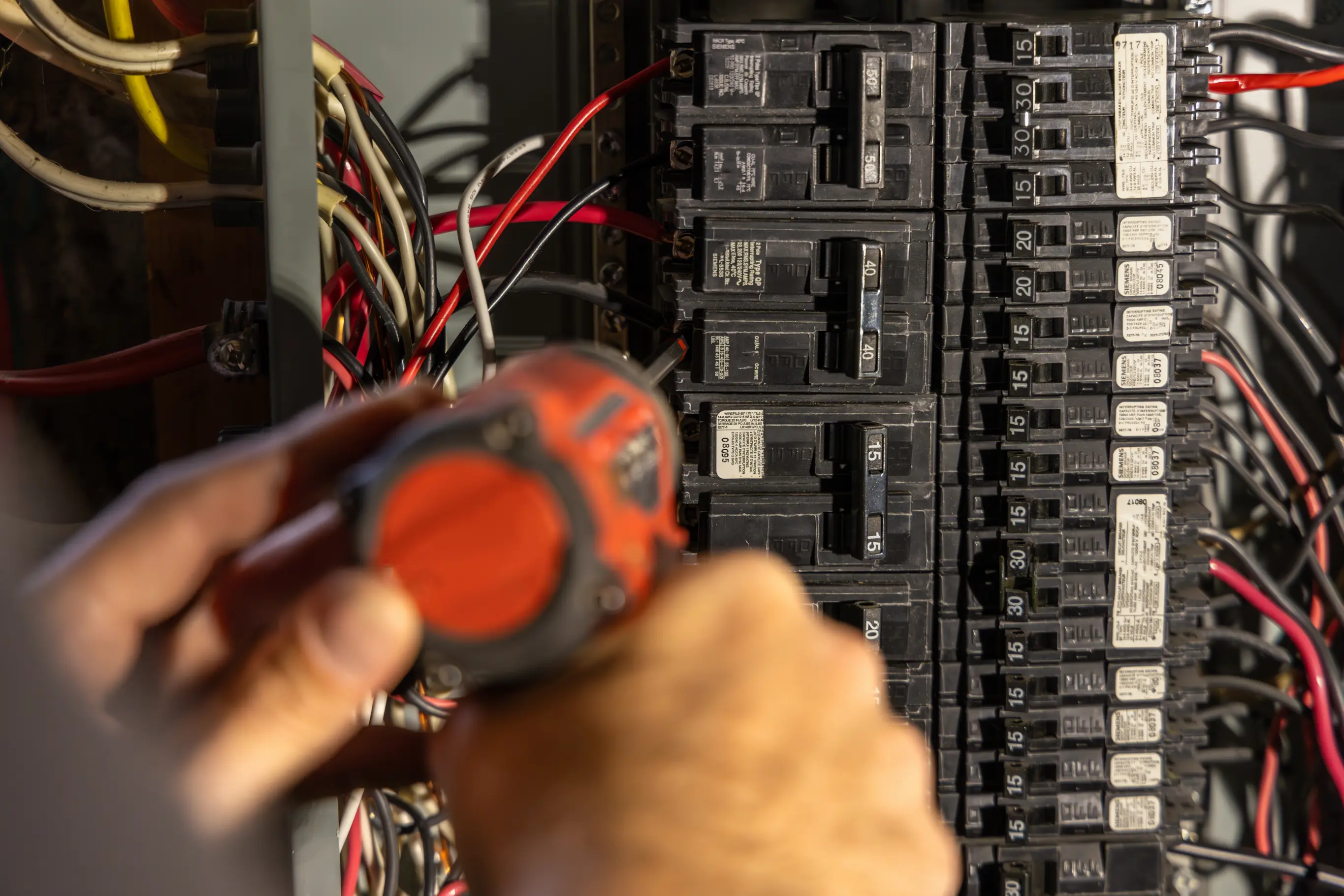
Your electrical panel — also called a breaker box or load center — is the hub that distributes power throughout your home. Every circuit in your house runs back to it.
When solar panels are installed, the system connects to your panel through a dedicated solar breaker. That breaker feeds the power your panels generate back into your home's electrical system.
For that connection to work safely and correctly, your panel needs to meet a few requirements:
- Sufficient amperage capacity for the total load
- Available breaker space for the solar circuit
- An age and condition that meets current electrical code
If any of those are in question, an upgrade may be required before the solar installation can proceed.
100-Amp vs. 200-Amp Service: What's the Difference?
The most common panel limitation we encounter is 100-amp service — an older standard that was typical in homes built before the 1980s.
A 100-amp panel was designed for a much lower electrical load than most modern homes draw today. Add air conditioning, EV charging, electric appliances, and now a solar system, and a 100-amp panel is often working at or beyond its intended capacity.
200-amp service is the current standard for residential construction and is what most solar installations require. It provides:
- Enough capacity to handle the home's existing load plus the solar interconnection
- Adequate breaker spaces for the solar circuit (and often a battery if added later)
- Compliance with current NEC (National Electrical Code) requirements
If your home still has a 100-amp panel, a solar installer will typically require an upgrade to 200-amp service before the solar system can be commissioned.
Signs Your Panel May Need an Upgrade
Even if your panel is already rated for 200 amps, there are other conditions that can trigger an upgrade requirement:
Not enough breaker spaces
Solar requires its own dedicated breaker. If your panel is full — every slot occupied — there's no room to add one without removing something else or installing a subpanel. Many solar installations also leave room for future battery storage, which requires additional breaker space.
The panel is older than 25–30 years
Older panels — even those rated at 200 amps — may not meet current code requirements or may have worn components that an inspector will flag. In some jurisdictions, a solar permit will trigger an electrical inspection that requires the panel to be brought up to current standards.
Specific panel brands with known issues
Certain legacy panel brands have documented reliability or safety concerns. If your home has one of these, an upgrade is often recommended regardless of solar — and combining it with your solar installation can make the overall project more cost-effective.
Federal Pacific, Zinsco, or split-bus panels
These older panel types are commonly flagged during solar permitting. If your home has one, your installer will almost certainly recommend replacement.
How Much Does a Panel Upgrade Cost?
A panel upgrade typically runs between $1,500 and $4,000 for a residential 200-amp service upgrade, depending on:
- Your current panel type and location
- Whether the utility service entrance needs to be updated
- Local permitting fees
- Labor rates in your area
When a panel upgrade is done as part of a solar installation, the costs are often bundled into the overall project — and in some cases, the upgrade cost may be eligible for inclusion in your solar financing.
It's also worth noting that a panel upgrade has standalone value independent of solar. If your home was already due for one, combining it with the solar project is a practical way to consolidate the work and minimize disruption.
How Lunex Handles Panel Evaluations
At Lunex Power, electrical work isn't something we hand off to a third party. Our in-house team of licensed electricians handles panel evaluations, upgrades, and solar interconnections as part of a fully integrated installation.
Here's how it works in practice:
- Site evaluation — During your initial consultation, we review your current panel, service amperage, available breaker space, and panel age and condition.
- Proposal — If an upgrade is needed, it's included in your proposal with a clear cost breakdown. No surprises after signing.
- Permitting — Our team handles all electrical permitting alongside the solar permitting process, coordinating with your local authority and utility.
- Installation — Panel upgrade and solar installation are completed by the same crew, reducing scheduling complexity and keeping the project on a single timeline.
- Inspection — Our licensed electricians ensure the work passes all inspections required for your solar system to receive permission to operate.
Learn more about our electrical services »
The Bottom Line
Not every home needs a panel upgrade before going solar — but it's one of the first things a qualified installer should evaluate.
If your home has:
- 100-amp service
- A full or aging panel
- A flagged legacy panel brand
...an upgrade is likely part of your project. The good news is that when it's handled by an in-house team as part of a solar installation, the process is straightforward, the costs are transparent, and the result is a system that's built to code and ready to perform for decades.
The worst time to find out your panel needs work is after your solar system is designed and permitted. The best time is at the very first site visit — which is exactly where we start.