Back to Blog
Do Solar Panels Survive Hurricanes and Hail? What the Ratings Actually Mean
Phil Huet
7 min read
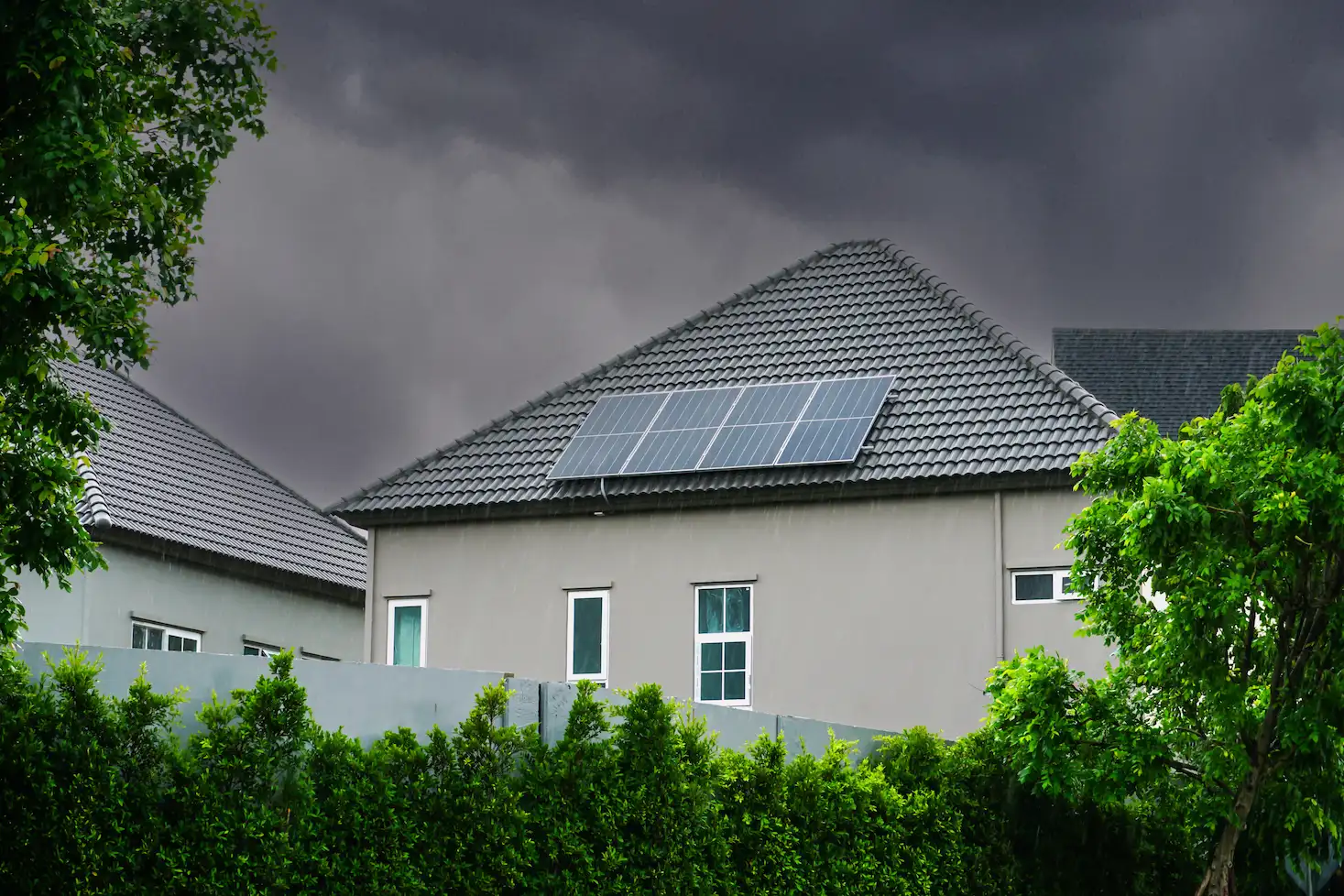
It's a fair question, and one we get constantly — from homeowners along the Gulf Coast bracing for another hurricane season, and from customers in Colorado who've seen what a bad hail storm does to a roof. If you're about to put a system on your roof that you expect to last 25 years or more, you want to know it can take what the weather throws at it.
The short answer: modern solar panels are among the more durable things on your roof, and they're tested against exactly these conditions before they're ever sold. But durability isn't only about the panel — how it's installed matters just as much. Here's what the ratings mean, where the real risks are, and how the warranty-versus-insurance question shakes out.
Solar Panels Are Tested for This
Solar panels don't get to market on a manufacturer's word that they're tough. They're certified against international standards that put them through mechanical load, impact, and weather testing designed to simulate the worst a roof sees.
Wind and mechanical load. Panels are tested to withstand significant pressure from both directions — wind pushing up under them and load pressing down (the same test that covers snow load up north). Quality panels are rated to handle wind loads that correspond to hurricane-force conditions. In real-world terms, that's why post-storm surveys after major hurricanes have repeatedly found that solar arrays fare better than the roofs around them — often the panels are intact while shingles are gone.
Hail impact. This is the one Colorado homeowners ask about, and the answer is reassuring. Panels are impact-tested by firing ice balls at them at high speed — commonly around one-inch hail traveling at roughly 50 mph — across the face of the panel. The tempered glass used on the front of a modern panel is engineered to take those hits. Large, severe hail can still break a panel, but the same storm that cracks a panel is usually one that's damaging roofs, cars, and siding too.
The takeaway: the panel itself is rarely the weak point. When solar systems fail in a storm, it's usually not the glass.
The Installation Matters As Much As the Panel
This is the part that doesn't show up on a spec sheet, and it's where a lot of the real-world difference lives. A panel rated for hurricane-force wind is only as good as its attachment to your roof. The mounting system — the rails, the roof attachments, the way loads are distributed and sealed — is what actually keeps the array on the house when the wind is trying to lift it off.
That's why the details of installation matter so much in high-wind regions:
- Attachment and racking engineered and spaced for the wind zone your home sits in, not a generic layout.
- Proper roof penetrations and flashing so the mounting points stay watertight through wind-driven rain — a storm-related leak is more often about a bad penetration than a bad panel.
- Permitting and inspection to the local wind-load requirements, which in Florida are among the strictest in the country for exactly this reason.
A quality panel installed poorly is more vulnerable than a modest panel installed correctly. This is a big part of why we're wary of the cheapest, fastest installs — the durability you're paying for is only real if the system is anchored and sealed the way the local code and conditions demand. It's the same theme that runs through our post on what solar maintenance and warranties actually cover: the hardware is durable, but the workmanship is what determines whether that durability holds up.
Where the Real Risks Are
If the glass and the mounting are sound, what actually goes wrong in a bad storm?
- Flying debris. In a hurricane, the danger isn't usually the wind acting on the panel directly — it's what the wind picks up and throws. A large branch or airborne debris can damage a panel the same way it damages anything else on your roof.
- Roof failure underneath. If the roof deck itself fails, the panels go with it. This is why the condition of your roof matters before you install — a system is only as sound as what it's bolted to.
- Water intrusion at penetrations. As noted above, a poorly sealed mount is a leak waiting for the next storm, independent of the panels themselves.
None of these are reasons not to go solar in a storm-prone area — they're reasons to install correctly, on a sound roof, by someone who builds to the local wind requirements.
What Happens If a Panel Does Get Damaged
Say the worst happens and severe hail or debris cracks a panel. Two different kinds of coverage come into play, and it's worth understanding which is which before you ever need them — a distinction we cover in more depth in the maintenance and warranties post:
- Manufacturer warranties cover defects and degradation — a panel that fails because of how it was built, or that degrades faster than promised. They do not cover storm damage.
- Storm and impact damage is a homeowner's insurance matter. A rooftop solar system is generally treated as part of your home, so hail or hurricane damage to panels is typically handled the same way as damage to your roof — subject to your policy's terms and deductible.
It's worth confirming with your insurer that your system is covered under your policy before a storm, not after. Most homeowners find their panels are already covered as part of the dwelling, but it's a five-minute conversation worth having.
Region by Region
The durability question looks a little different depending on where you are:
- Florida and the coastal Southeast — the concern is hurricane-force wind and debris. The panels are rated for it; the priority is an installation engineered and permitted to Florida's strict wind-load code, on a roof that's in good shape.
- Colorado and the hail belt — the concern is hail. Modern tempered-glass panels handle typical hail well, and severe-hail events that break panels are usually insurance events that hit the whole property.
- The Northeast — the same mechanical-load ratings that cover wind also cover snow load, so a properly designed system carries winter weight without issue.
In every one of these markets, the pattern is the same: the panel is built for the conditions, and a correct installation is what turns that rating into real-world resilience.
The Bottom Line
Modern solar panels are tested and rated to survive the wind, debris, and hail that come with living in a storm-prone part of the country — and in real hurricanes, they routinely outlast the roofs they sit on. The system's resilience comes down to two things: a quality panel, and an installation engineered and sealed for your local conditions by a team that builds to code.
If you're weighing solar in a hurricane or hail region and want a straight answer about how a system would be built to handle your climate — and how it'd be covered if the worst happened — reach out to our team and we'll walk you through it.
Lunex Power installs solar panel systems and home battery storage across Florida, Massachusetts, Connecticut, Rhode Island, Colorado, and North Carolina. Get a free quote to see what the numbers look like for your home.