Back to Blog
Net Metering in North Carolina: How It Works and What Homeowners Should Know
Phil Huet
Updated:
10 min read
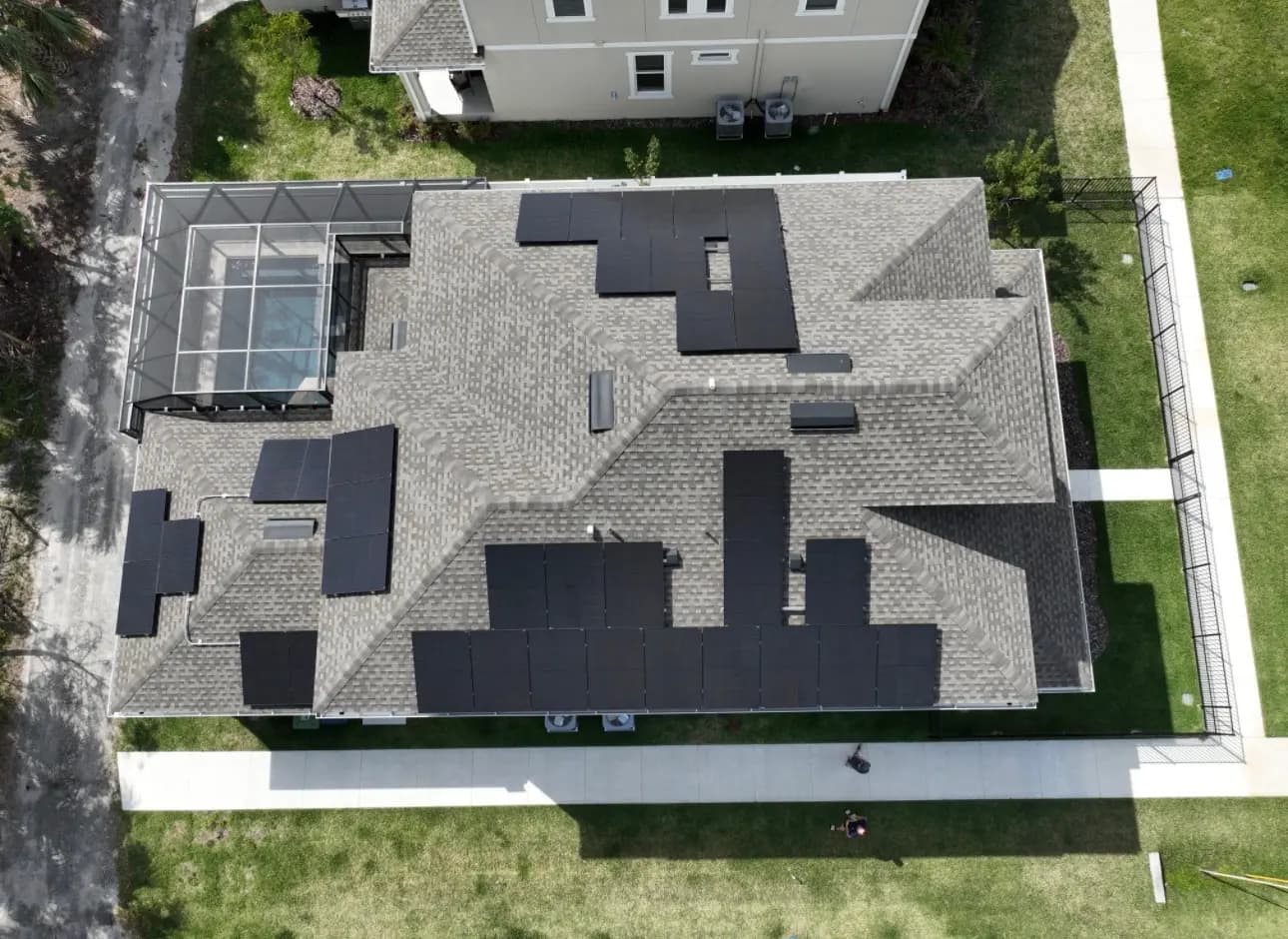
North Carolina is one of the top solar states in the country by installed capacity — fourth nationally as of 2025 — and the sun is genuinely there to back it up, with most of the state averaging well over 200 sunny days per year. But if you've been researching solar here, you've probably noticed that the net metering picture is more complicated than most states. That complexity matters, because it directly affects what your solar system will earn over its lifetime.
Here's a clear breakdown of what net metering is, how North Carolina's current programs work, what changed in 2023, and why the end of 2026 represents a real decision point for homeowners in Duke Energy territory.
What Is Net Metering?
Net metering is a billing arrangement with your utility: when your panels produce more than your home is consuming, the surplus flows to the grid and you're credited for it. For a full rundown of how it works in general — full-retail vs. reduced-rate credit and why it matters — see what is net metering and how does it work.
North Carolina's situation is more complicated than most states': depending on your utility and when you go solar, you may fall on very different points of that spectrum — from near-full-retail credit to a much lower export rate. That's what the rest of this guide breaks down.
What Changed in 2023 — and Why It Matters
North Carolina had offered full retail-rate net metering since 2000. In March 2023, the North Carolina Utilities Commission approved new net metering rules for Duke Energy's residential customers (Docket No. E-100 Sub 180), effective October 1, 2023.
The legacy program — Rider NM, with full 1:1 retail-rate credits — was closed to new applicants on October 1, 2023. Customers who had an approved interconnection application on file before that date were grandfathered into Rider NM and can remain on it through December 31, 2026, at which point they automatically transition to the new Bridge Rate.
New solar customers who interconnect after October 1, 2023 — which is everyone going solar now — have two options, both of which compensate exported energy at a reduced rate compared to the old program. Understanding which option makes more sense is one of the most important decisions Duke Energy solar customers currently face.
The Two Current Options for Duke Energy Customers
Duke Energy serves the vast majority of North Carolina — both Duke Energy Carolinas (western and central NC) and Duke Energy Progress (central and eastern NC). If you're a Duke customer, here's what's available:
Option 1: Net Metering Bridge Rate (Rider NMB) — Available Through December 31, 2026
The Net Metering Bridge Rate is the better of the two current options for most homeowners, and it has a hard deadline.
Under NMB, production and consumption are netted monthly. Any surplus you export to the grid is credited at the avoided cost rate — approximately $0.034/kWh as of 2026. That's about 75–80% below the full retail rate, so NMB is not traditional net metering. But there are meaningful protections baked in: you're not required to enroll in a time-of-use rate schedule, which matters because TOU pricing exposes you to higher electricity costs during peak evening hours when solar panels aren't producing.
The other key feature: once your interconnection request is approved under NMB, Duke Energy locks in your eligibility on this rate for up to 15 years from your interconnection application date. Credits carry forward month to month with no annual true-up cashout.
There's one important catch: the Bridge Rate has annual capacity caps. Once a given year's cap is filled, new applicants are pushed to the Residential Solar Choice rate instead. The program closes permanently to new applicants on December 31, 2026.
Option 2: Residential Solar Choice Rate (Rider RSC)
The Residential Solar Choice rate is the default plan for Duke customers who don't secure the Bridge Rate — either because they miss the deadline or because the annual capacity cap is already full.
RSC pairs with a time-of-use rate schedule, including Critical Peak Pricing. Under TOU, how much you pay for electricity depends on when you use it — on-peak hours (typically late afternoons and evenings) run around $0.21–$0.22/kWh, while off-peak hours drop to $0.10–$0.13/kWh. The structural problem for solar owners: your panels produce most of their power during midday off-peak hours, when the rate is lowest — while your household draws from the grid during the expensive evening peak when panels aren't generating.
Exported surplus under RSC is also credited at the avoided cost rate (~$0.034/kWh), same as NMB. The difference is that RSC adds the TOU exposure without the protections NMB includes. Customers must also maintain enrollment on RSC for at least 24 months before being eligible to switch to NMB, if capacity is available.
Duke customers on both plans are subject to a monthly minimum bill — $28/month for Duke Energy Progress customers and $22/month for Duke Energy Carolinas customers — along with non-bypassable charges for storm recovery and grid costs.
Which Utilities Offer Net Metering in North Carolina?
Duke Energy is the dominant utility in North Carolina, but not the only provider, and the net metering picture varies meaningfully by who serves your home:
Duke Energy Carolinas and Duke Energy Progress — covering the majority of the state. As described above, new customers choose between NMB (through 12/31/2026) and RSC, with exports credited at the avoided cost rate (~$0.034/kWh) under both.
Dominion Energy — serving northeastern North Carolina. Dominion offers traditional 1:1 full retail-rate net metering at approximately $0.14/kWh, with credits rolling forward month to month. There's a $200 interconnection fee for systems under 20 kW. For homeowners in Dominion territory, the net metering picture is considerably more favorable than for Duke customers.
Blue Ridge Electric Membership Cooperative — serving Ashe, Alleghany, Watauga, Avery, and surrounding western NC counties. Blue Ridge EMC customers can choose between net metering at 1:1 retail rates or net billing at wholesale rates. The net metering option is the stronger choice for most members.
Other electric cooperatives and municipal utilities — North Carolina has over 20 electric cooperatives and numerous municipal providers. Unlike investor-owned utilities, co-ops and municipalities are not required by state law to offer net metering. Some do; many offer net billing at avoided-cost rates of around 3–4 cents/kWh; some have no solar export program at all. If your home is served by a co-op or municipal utility, contacting them directly to understand their specific program is an essential first step.
Why the Bridge Rate Deadline Is a Real Decision Point
The December 31, 2026 deadline for the Net Metering Bridge Rate isn't marketing pressure — it's a structural feature of the program with a meaningful financial consequence.
After that date, new Duke solar customers go directly onto the Residential Solar Choice rate with its TOU exposure. EnergySage has estimated that the new rate structure reduces the average solar customer's long-term savings by approximately 20% compared to the old program — and extends payback periods by two to three years. The Bridge Rate doesn't fully restore the old economics, but it meaningfully reduces the gap by removing the TOU risk for 15 years.
The practical implication for timing: getting your interconnection request filed and approved takes time — typically several weeks of utility processing after your installer submits the application. Signing a contract in November or December gives you little margin. Late summer or early fall is the realistic window to ensure your paperwork clears before the deadline. The annual capacity caps add another layer of urgency; if the year's cap fills before your application is submitted, you lose your spot in the Bridge Rate queue for that year.
Net Metering and Battery Storage in North Carolina
With Duke's avoided-cost export rate at ~$0.034/kWh, the financial calculus for battery storage in North Carolina is different than in states with full retail-rate net metering.
When export credits are worth only 3.4 cents per kWh, every kWh your battery captures and uses in your home is worth the full retail rate — roughly $0.12–$0.14/kWh — instead of 3.4 cents. Self-consumption is roughly four times as valuable as exporting in North Carolina under the current rate structure. That makes battery storage a meaningful addition to a solar system here, specifically because it redirects surplus from low-value grid export toward high-value household use.
Duke Energy also offers battery incentive programs — Power Manager for Duke Energy Carolinas customers and EnergyWise Home for Duke Energy Progress customers — that pay solar-plus-battery owners for allowing Duke to draw from their stored energy during peak demand events. These virtual power plant programs can generate up to approximately $1,100 per year in credits, operating as a separate income stream alongside your solar net metering credits.
A Note on System Sizing
Under the current Duke rate structure, the avoided-cost export rate of ~$0.034/kWh makes deliberate oversizing a particularly poor strategy. If you produce significantly more than you consume, you're exporting surplus at 3–4 cents per kWh while buying replacement power at 12–14 cents. The right target — as with most well-designed solar systems — is a system sized to offset close to 100% of your annual consumption, maximizing the value of self-consumed power rather than running up low-value export credits.
Duke's residential sizing cap is 20 kW AC for residential customers, though most homes need far less than that. Systems over 15 kW are also subject to grid access fees ($1.50/kW/month for Duke Energy Progress; $2.05/kW/month for Duke Energy Carolinas), which further argues against oversizing.
The Broader Incentive Picture
The federal solar tax credit expired for new installations at the end of 2025, so that's no longer part of the equation for homeowners going solar now. North Carolina still has a strong property tax exemption — solar installations are 100% exempt from property tax increases on residential properties, meaning the added home value from solar doesn't raise your tax bill. The state's sales tax exemption on solar equipment also remains in place. For a full look at what's available — property tax exemptions, sales tax exemptions, Duke's battery incentive programs, and what payback looks like in 2026 — see our North Carolina Solar Incentives guide.
The Bottom Line
North Carolina's net metering landscape is more complicated than most states, and less favorable for new Duke Energy customers than it was before 2023. Full retail-rate net metering is gone for the majority of NC homeowners. What remains is a two-tier choice between a Bridge Rate that offers meaningful protections with reduced export compensation, and a TOU-based plan that exposes you to the most adverse rate structure.
The Bridge Rate closing on December 31, 2026 is the clearest near-term factor shaping the timing decision for Duke customers. Homeowners who lock in before the deadline get 15 years of rate protection; those who wait get pushed to a plan with meaningfully weaker economics.
For Dominion customers in northeastern NC, the picture is different and simpler — full retail-rate net metering is still available, the financial case for solar is stronger, and timing pressure is less acute.
Wherever you are in North Carolina, understanding which utility serves your home and what program you'd actually qualify for is the foundation of any honest solar evaluation.
Lunex Power installs solar panel systems and home battery storage across North Carolina, Florida, Massachusetts, Connecticut, Rhode Island, and Colorado. Not sure which Duke or Dominion rate you'd qualify for — or whether you can still make the Bridge Rate deadline? Talk to our team ».