Back to Blog
Commercial EV Charger Installation: What Business Owners Need to Know
Phil Huet
8 min read
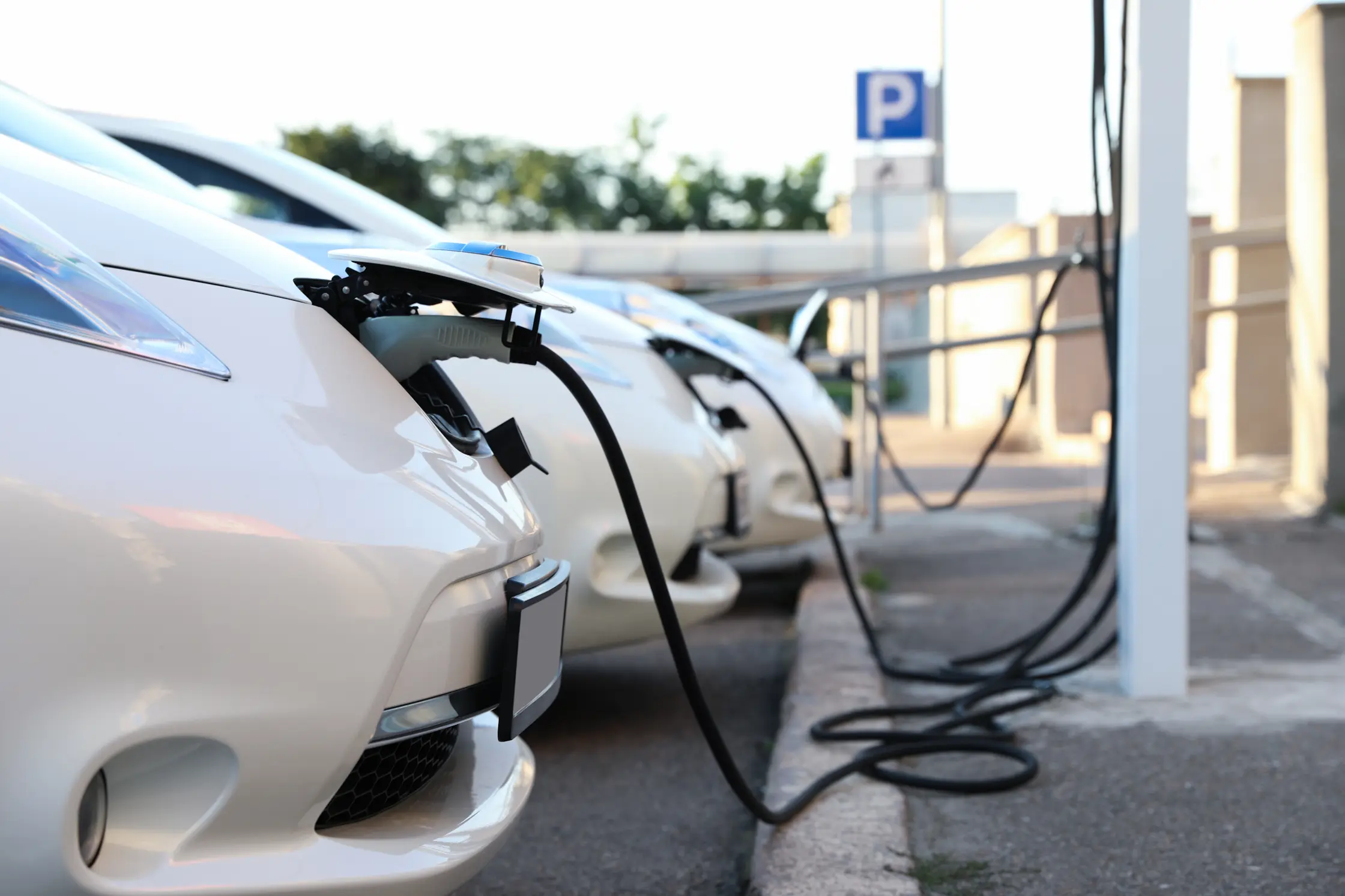
Home EV charging is a solved problem for most drivers. You plug in overnight and wake up to a full battery.
Commercial EV charging is a different situation entirely — and for business owners, it's becoming harder to ignore.
EV adoption is accelerating. Employees expect charging at work. Tenants in multifamily properties are asking about it before signing leases. Retail centers are using it to drive dwell time. Fleet operators need it to keep vehicles running. The demand is real, and properties without charging infrastructure are starting to feel the gap.
This guide covers what commercial EV charger installation actually involves, how it differs from residential, and what you need to know before moving forward.
Talk to our team about commercial EV charging options »
How Commercial EV Charging Differs from Residential
If you've read about home EV charger installation, some of the fundamentals carry over — you're still dealing with 240V circuits, dedicated breakers, and licensed electrical work. But commercial installs introduce a layer of complexity that residential projects don't have.
Multiple simultaneous users. A home charger serves one vehicle. A commercial installation might need to serve a parking lot full of them. That changes everything about how the system is sized and managed.
Load management. When multiple chargers are running at once, you need a strategy for how power is distributed. Networked commercial chargers use load balancing software to share available capacity intelligently — preventing demand spikes that would drive up your utility costs or trip breakers.
Utility coordination. Larger commercial installations often require coordination with your utility provider, particularly when the power demand approaches transformer capacity. This isn't something a residential install ever involves.
Infrastructure scale. Running conduit and wiring across a parking lot, through a garage structure, or along a commercial building exterior is a different scope than running a circuit from a panel to a garage wall. Trenching, weatherproof enclosures, and proper commercial-grade hardware all factor in.
Permitting and compliance. ADA accessibility requirements, local code compliance, and utility interconnection approvals are all considerations on commercial projects that simply don't come up residentially.
Who Needs Commercial EV Charging
The use cases vary, but the underlying driver is the same across all of them: EV adoption is outpacing charging infrastructure, and the properties that solve for it gain a real advantage.
Multifamily properties — Apartment and condo residents are increasingly EV owners who can't charge at home without dedicated infrastructure. Properties that offer charging command higher rents and have a genuine differentiator in a competitive market.
Office and mixed-use — Employees with EVs want to charge while they work. Offering charging as a workplace benefit costs relatively little at scale and is meaningfully valued.
Retail and hospitality — Charging increases dwell time, which translates directly to spend. A customer who pulls in to charge while shopping or dining is more likely to stay longer. Some retailers have found that EV chargers function as a customer acquisition tool.
Fleets — Businesses operating electric delivery vehicles, service vehicles, or company cars need on-site charging infrastructure that can reliably turn around a fleet overnight. This is one of the highest-ROI use cases for commercial EV charging.
Healthcare, education, and government — These properties are often under sustainability mandates or employee retention pressure, both of which commercial EV charging helps address.
Level 2 vs. DCFC: Choosing the Right Hardware for Your Use Case
Commercial installations typically involve one of two charging levels, and the right choice depends on how your vehicles will be used.
Level 2 (AC Charging)
Level 2 chargers run on 208–240V and add roughly 20–30 miles of range per hour. For most commercial applications — overnight fleet charging, workplace charging, multifamily residential — Level 2 is the practical and cost-effective choice. Equipment is affordable, installation is manageable, and the charge rate is sufficient for vehicles that sit for several hours.
DC Fast Charging (DCFC)
DCFC chargers operate on high-voltage DC power and can add 100–200+ miles of range in 20–30 minutes. They're appropriate for high-turnover applications — highway corridor stops, retail locations with short parking durations, or fleet depots that need rapid turnaround.
The tradeoff is cost and infrastructure. DCFC hardware runs $15,000–$50,000+ per unit, and the electrical infrastructure required (often 480V three-phase service) is a significant undertaking. For most commercial properties, Level 2 is the right starting point.
What the Installation Process Looks Like
Every commercial EV charging project is scoped differently, but the general sequence looks like this:
1. Site assessment and load analysis A licensed electrician evaluates your existing electrical infrastructure — panel capacity, available amperage, transformer sizing — and determines what the system can support and what upgrades, if any, are needed.
2. System design Based on your use case, parking layout, and infrastructure, a charging system is designed: number of units, placement, circuit routing, load management approach, and hardware selection.
3. Utility coordination (if required) For larger installations, your utility provider may need to be notified or may need to approve the interconnection. This step varies significantly by utility and project scope.
4. Electrical infrastructure work This is often the most involved part of a commercial project — running conduit, installing subpanels or load management hardware, trenching where needed, and building out the circuits to each charger location.
5. Charger installation and commissioning Hardware is mounted, connected, and configured. Networked chargers are set up with load balancing software, and payment processing or access control is configured if applicable.
6. Permit and inspection Commercial electrical work requires permits, and inspections are required before the system goes live.
Timeline varies by project complexity, but straightforward commercial installations typically run two to four weeks from assessment to operational system.
Schedule a commercial EV charging assessment »
Does Your Electrical Infrastructure Need an Upgrade?
This is the question that most directly affects project cost, and the answer depends on what you're starting with.
Many commercial buildings — particularly older ones — are running on electrical service that was sized before EV charging was a consideration. Adding 10 Level 2 chargers to a building running close to its panel capacity isn't straightforward.
Common infrastructure upgrades on commercial EV projects include:
- Panel upgrades or subpanel additions to add available capacity
- Service upgrades when the incoming utility service is undersized for the new load
- Transformer upgrades when the utility transformer serving the property needs to be upsized
- Load management hardware to intelligently distribute available power across chargers without requiring a full service upgrade
The last option — load management — is worth understanding. Smart load management systems let you deploy more chargers than your infrastructure could otherwise support, by dynamically distributing available power based on real-time demand. In many cases, it's a more cost-effective path than a full infrastructure upgrade.
A proper site assessment will identify which path makes sense for your property.
Networked vs. Non-Networked Chargers
For commercial installations, networked chargers are almost always the right choice.
Non-networked chargers are simpler and cheaper upfront, but they're essentially a dumb piece of hardware — no usage data, no remote management, no ability to charge customers or restrict access, no load balancing.
Networked chargers connect to a cloud management platform and give you:
- Usage monitoring — see which chargers are in use, how much energy is being consumed, and utilization rates over time
- Load balancing — distribute available power intelligently across chargers
- Access control — restrict charger use to employees, tenants, or paying customers
- Payment processing — charge customers directly through the network if you want to monetize the infrastructure
- Remote management — adjust settings, restart chargers, and troubleshoot without a site visit
For fleet applications, employee parking, or any situation where you need visibility into how the infrastructure is being used, networked chargers pay for the incremental cost quickly.
What Does Commercial EV Charger Installation Cost?
Cost ranges vary considerably based on the number of chargers, infrastructure requirements, and hardware selection. General ranges:
- Level 2 commercial charger hardware: $600–$2,500 per unit depending on brand, output, and features
- Electrical installation per charger (assuming reasonable infrastructure): $1,000–$3,000
- Panel upgrade or subpanel addition (if needed): $3,000–$15,000 depending on scope
- Trenching and conduit runs across parking areas: $2,000–$10,000+ depending on distance and conditions
- DCFC hardware: $15,000–$50,000+ per unit
The only way to get an accurate number for your property is a professional assessment. Online estimates don't account for the specifics of your electrical infrastructure, parking layout, or local permitting requirements.
Getting Started
Commercial EV charging is an infrastructure investment — but it's one with a clear and growing business case and a relatively predictable payback period.
The first step is understanding what your property's existing electrical infrastructure can support and what a system sized for your needs would actually require. That's exactly what a site assessment surfaces.
Our team handles commercial electrical work across Florida and Massachusetts — including EV charger installations from small multi-unit deployments to larger commercial projects.