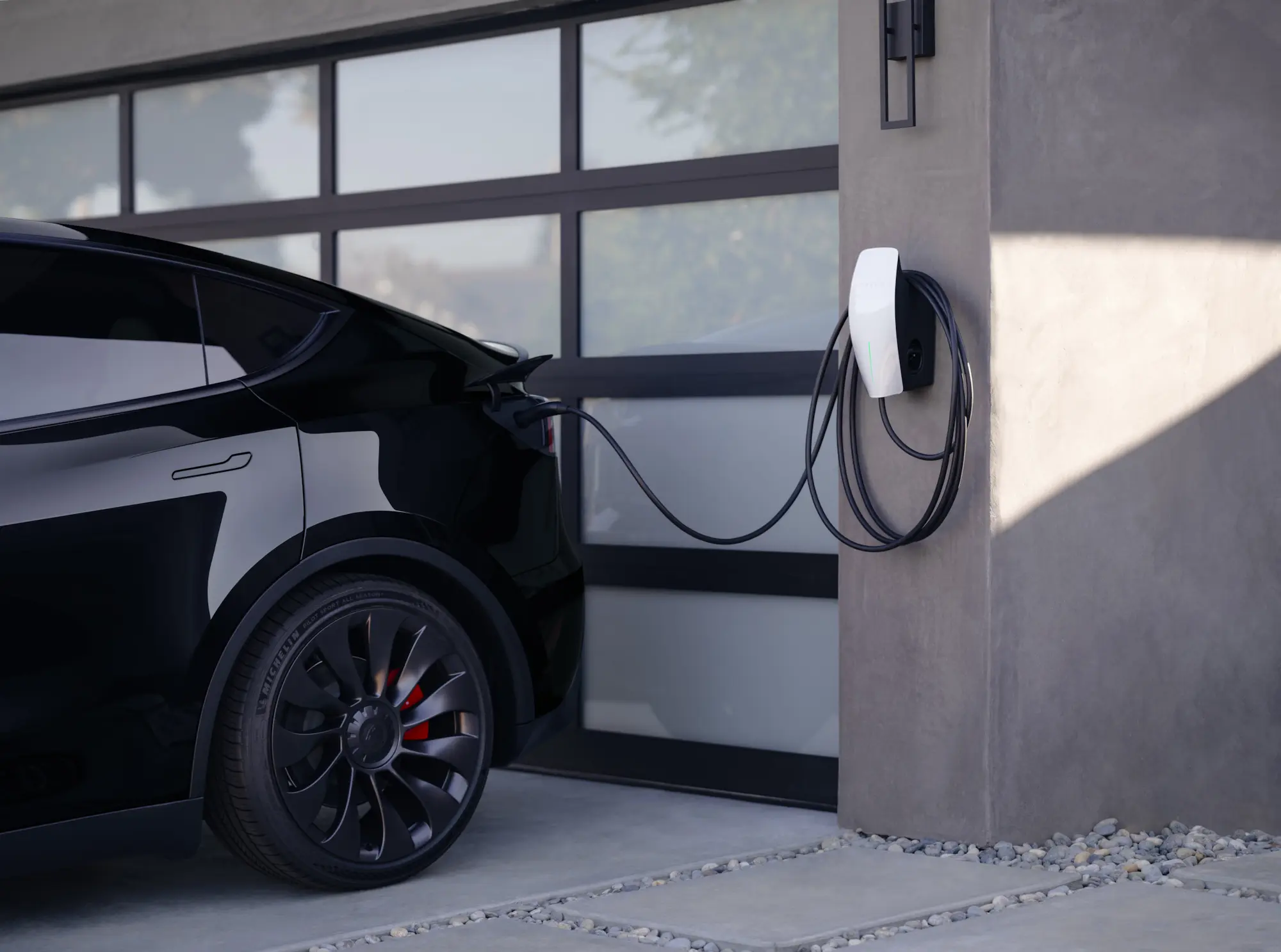
Electric vehicles are becoming harder to ignore.
Whether you just bought your first EV or you're seriously considering one, the question of home charging comes up fast. Relying on public charging stations works in a pinch, but most EV owners quickly realize that plugging in at home every night is a completely different experience.
The good news: home EV charger installation is straightforward for most homes. The less obvious part is knowing what you're actually signing up for before you start.
This guide covers everything you need to know — from choosing the right charger to what the installation process actually looks like.
Contact us to get your home EV charger installed »
Level 1 vs Level 2 Charging: The Decision That Shapes Everything
Before anything else, you need to understand the difference between Level 1 and Level 2 charging. This one decision affects your equipment, your electrical work, and how satisfied you'll be with home charging day to day.
Level 1 Charging
Level 1 charging uses a standard 120V household outlet — the same kind your lamp or phone charger plugs into.
Most EVs come with a Level 1 charging cable in the box. You plug it into a regular outlet and you're technically charging. No electrician required, no new hardware.
The tradeoff is speed. Level 1 typically adds somewhere between 3 and 5 miles of range per hour of charging. For an EV with a 250-mile range, a full charge from empty could take 50 hours or more.
For drivers who commute fewer than 30–40 miles a day and charge consistently overnight, Level 1 can be workable. For everyone else, it gets frustrating quickly.
Level 2 Charging
Level 2 charging runs on 240V — the same voltage as a dryer or oven — and requires dedicated hardware and a proper electrical circuit.
The difference in speed is significant. Level 2 typically adds 20 to 30 miles of range per hour, meaning most EVs can fully charge overnight with plenty of time to spare.
For most homeowners, Level 2 is the practical choice. It eliminates range anxiety, fits naturally into an overnight charging routine, and makes the EV ownership experience genuinely convenient.
What Level 2 Installation Actually Involves
Installing a Level 2 home charger is not a DIY project. It requires a licensed electrician and, in most jurisdictions, an electrical permit.
Here is what the process typically looks like:
1. Site assessment A licensed electrician evaluates your panel capacity, determines where the charger will be mounted, and identifies the best route for running new wiring.
2. Dedicated circuit installation A dedicated 240V circuit is run from your electrical panel to the charger location. Most Level 2 chargers require a 50-amp or 60-amp breaker.
3. Charger mounting and connection The charger unit is mounted — typically in a garage or on an exterior wall — and connected to the new circuit.
4. Permit and inspection Most localities require a permit for this type of work, and an inspection is usually required before the installation is considered complete. A licensed electrician handles this as part of the job.
The timeline from assessment to a working charger is typically one to two days for a straightforward install.
Does Your Electrical Panel Need to Be Upgraded First?
This is one of the most common questions homeowners ask, and the answer depends on your current panel.
Older homes — particularly those with 100-amp service or panels that are already heavily loaded — may not have the capacity to add a 50- or 60-amp EV charging circuit without an upgrade.
Newer homes with 200-amp service and available breaker slots are usually well-positioned for a straightforward installation.
A qualified electrician can assess this during the site visit. If a panel upgrade is needed, that work would be completed before or alongside the charger installation.
It's worth knowing upfront rather than discovering it mid-project.
Contact us to assess your panel and EV charger options »
The Tesla Wall Connector: A Level 2 Charger Built for Home Use
For homeowners who own a Tesla — or who want a high-quality Level 2 charger that works with a wide range of EVs — the Tesla Wall Connector is one of the most capable and cleanly designed options available for residential installation.

Key specs worth knowing:
- Up to 44 miles of range added per hour (with appropriate circuit)
- Compatible with all Tesla models and, with an adapter, most other EVs
- Designed for both indoor and outdoor installation
- Simple, low-profile design that fits well in a garage or on an exterior wall
- Wi-Fi connectivity for monitoring and scheduling through the Tesla app
The Tesla Wall Connector requires a dedicated 60-amp circuit for full output, though it can be configured for lower amperage depending on your panel situation.
For most homeowners, it delivers more than enough speed for overnight charging — and the build quality and software integration make it a straightforward choice.
What Does Home EV Charger Installation Cost?
Costs vary depending on your home's existing electrical setup and how far the new circuit needs to run, but here are general ranges to set expectations:
- Level 2 charger unit: $400–$700 for quality residential hardware
- Electrical installation (dedicated circuit, labor, permit): $300–$800 for a standard install in a home with sufficient panel capacity
- Panel upgrade, if needed: $1,500–$3,500 depending on scope
For a home with an existing 200-amp panel and a garage adjacent to the electrical room, total project costs often land in the $700–$1,200 range. More complex installs — longer wire runs, older panels, exterior mounting — push costs higher.
The best way to get an accurate number is a professional site assessment. Generic online estimates rarely account for the specifics of your home.
Is Home EV Charging Worth It?
For most EV owners, yes — and by a significant margin.
Public charging is convenient when you need it, but the per-kWh cost is typically two to three times higher than charging at home. When you factor in the time spent finding and waiting at public stations, the math in favor of home charging becomes even clearer.
A Level 2 home charger pays for itself relatively quickly, especially for drivers who cover significant daily mileage. And for homes that already have — or are considering — solar panels, home charging can mean powering your vehicle almost entirely from energy your roof generates.
Conclusion: Get the Install Done Right
Home EV charger installation is a well-understood process, but the details matter. Circuit sizing, panel capacity, permit requirements, and charger placement all affect how the system performs long-term.
Working with a licensed electrician who has handled EV charger installations specifically means fewer surprises and a cleaner finished result.
If you're ready to move forward — or just want to understand what your home's setup would require — our team can walk you through it.
Contact us to schedule your EV charger installation assessment »