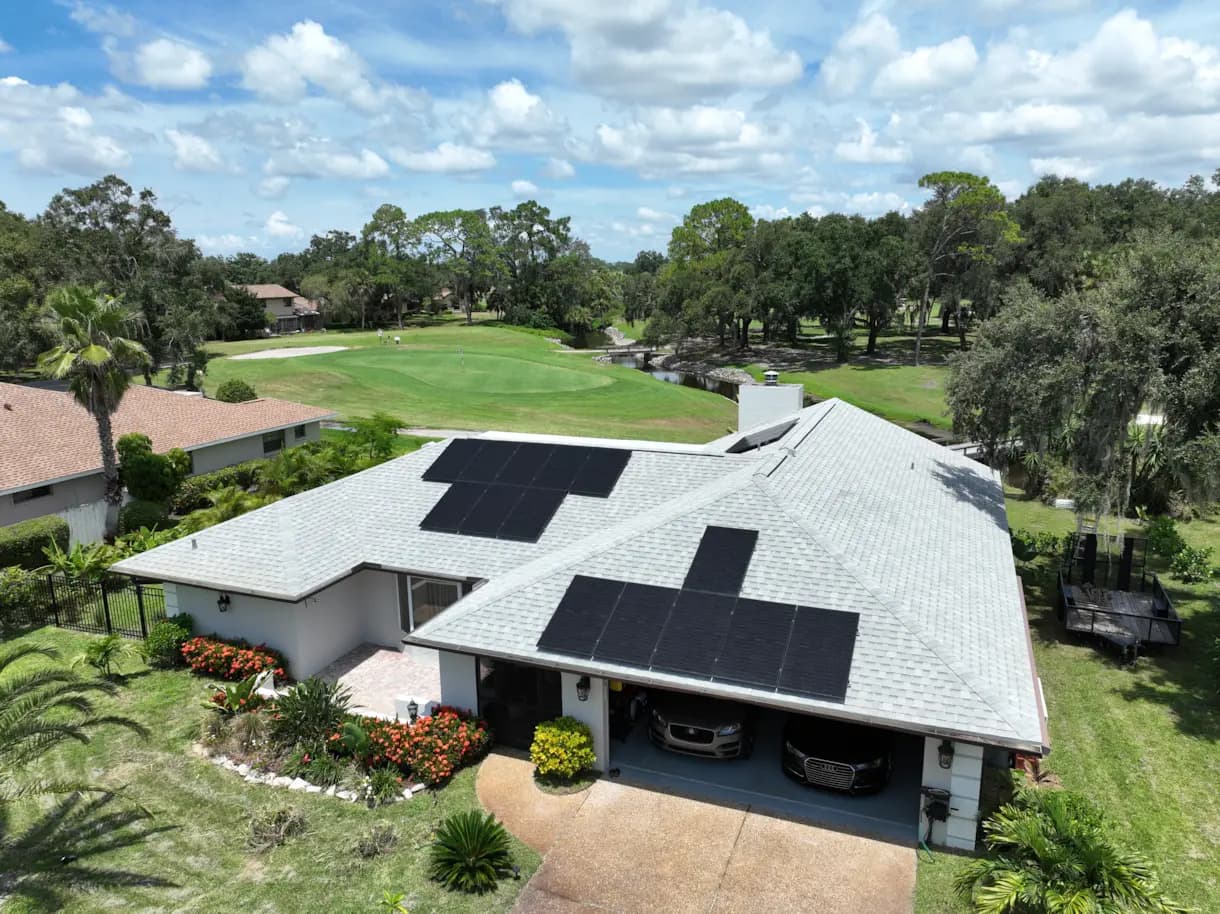
Florida's solar financing picture shifted in 2026. With the federal residential tax credit gone for homeowners who buy, the loan-versus-lease decision looks different than it did a year ago — and a few pieces of it are specific to Florida.
If you want the full rundown of every way to pay — cash, loan, lease, and PPA, and how to choose between them — start with our complete guide to solar loans vs. leases vs. cash. This page zeroes in on what's different in Florida: the state tax exemptions, realistic local payback, and how the 2026 credit change lands here.
Talk through your options with a Lunex specialist »
The Two Paths, in Brief
The full mechanics live in the guide above — here's the short version so we can get to what matters in Florida:
- Lease — a third party (Lunex or a financing partner) owns the system. You pay a fixed monthly rate, typically below your current utility bill, with $0–$500 down and maintenance included. You don't own the system or build equity in it.
- Loan — you own the system and spread the cost over roughly 10–20 years. After payoff, the electricity is essentially free, and the ownership benefits below are yours.
What's Specific to Florida
The State Tax Exemptions Reward Ownership
This is the biggest Florida-specific factor. When you own your system (cash or loan), two Florida exemptions work in your favor:
- Sales tax exemption — you don't pay Florida's 6% sales tax on solar equipment.
- Property tax exemption — solar adds value to your home, but Florida exempts that added value from your property taxes, so your bill doesn't rise because you went solar.
On a lease, the third party owns the equipment, so those ownership perks don't accrue to you the same way. For a full breakdown of what's available statewide, see our guide to Florida solar incentives.
The 2026 Federal Credit Split
The federal picture changed in a way that cuts differently for each path (we cover the full detail in the financing guide):
- If you buy (cash or loan): the residential credit (Section 25D) ended January 1, 2026, so there's no federal credit on your purchase.
- If you lease: the third-party owner can still claim the commercial credit (Section 48E) for systems placed in service through 2027, and that's reflected in competitive lease pricing right now.
The practical effect for Florida buyers: without the federal credit, a financed system's payback now typically lands somewhere between 10 and 13 years, depending on your usage, system size, and utility rate.
Net Metering Value Flows to the Owner
Florida still has some of the stronger retail net metering rules in the country — the credit you earn for the excess power your system sends to the grid. That ongoing value goes to whoever owns the system, which is another point in ownership's favor if you can swing it. Here's how net metering works in Florida.
Side-by-Side in Florida
| Feature | Solar Lease | Solar Loan |
|---|---|---|
| Ownership | System owned by Lunex or financing partner | You own the system |
| Upfront Cost | $0–$500 typical | Down payment or financed |
| Federal Incentive | Lessor claims 48E credit (through 2027); reflected in your rate | Section 25D expired Jan 1, 2026; not available to homeowners |
| FL Tax Exemptions | Ownership perks stay with the lessor | Sales + property tax exemptions apply to you |
| Maintenance | Fully handled by lessor | Homeowner responsibility |
| Home Equity Impact | No direct equity gain | Adds to resale value |
| Contract Term | 20–25 years; transferable | 10–20 year loan; system owned outright at payoff |
| Best Fit | Lowest upfront cost and simplicity | Long-term ownership, equity, and full savings |
How Lunex Models the Decision
Lunex Power doesn't lead with one option over another. Our in-house modeling platform evaluates your roof conditions, shading, usage history, rate structure, and applicable incentives to build a side-by-side financial comparison across both paths — including total 25-year savings, payback timelines, and system value. If you'd like, we can also bundle battery storage and EV charging into whichever financing structure fits your home.
Want to see the numbers for your specific situation?
Request a custom solar comparison »
Which Option Is Right for You in Florida?
There's no universal answer. Leasing tends to make sense for homeowners who want to start saving immediately with minimal upfront cost and no maintenance responsibility — and while the 48E credit still gives lessors pricing leverage through 2027, that case is real. Ownership tends to win for homeowners with a longer time horizon who want the Florida tax exemptions, the full net metering value, home equity, and the substantial savings that come after payoff.
The best way to decide is to see both options side by side with real numbers for your home and utility — which is exactly what a Lunex consultation provides.