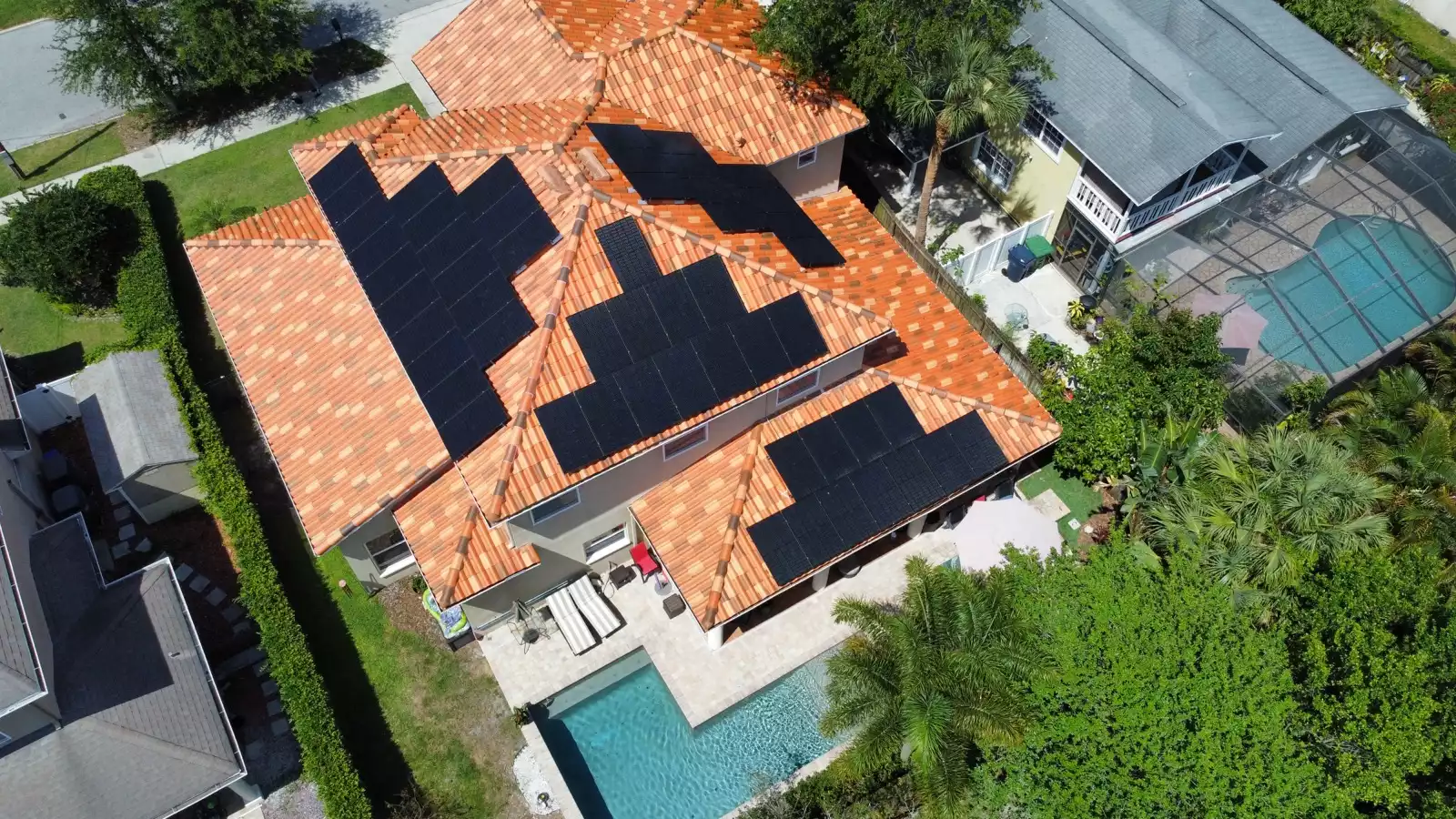
If you've been watching your electricity bill climb year after year, you're not imagining it. The national average residential electricity rate has risen roughly 21% over the past five years, and there's little reason to expect that trend to reverse. For most homeowners, electricity is one of the few monthly expenses they have no real control over — you use what you need, and you pay whatever the utility charges.
Solar changes that equation. But the way it's often marketed — "eliminate your electric bill entirely," "free energy from the sun" — sets unrealistic expectations that leave some homeowners disappointed. Here's a straightforward look at how solar actually affects your bill, what drives the size of your savings, and what the financial picture looks like in 2026.
Why Electricity Bills Keep Rising
Utility rates are driven by factors mostly outside your control: natural gas prices, grid infrastructure upgrades, weather-related demand spikes, and the growing energy footprint of data centers and EV adoption. Approved rate plans in many states include scheduled increases built in years in advance — meaning higher bills aren't a possibility, they're already baked in.
That underlying trend is actually one of the stronger arguments for solar. The more rates rise, the more valuable each kilowatt-hour your panels produce becomes. A system installed today doesn't just save you money at today's rates — it saves you more money each year as rates continue to climb.
How Solar Lowers Your Bill
Solar panels generate electricity directly from sunlight using photovoltaic (PV) cells. That electricity powers your home first — your appliances, HVAC, water heater, anything that's drawing power at that moment. Every kilowatt-hour your panels produce is a kilowatt-hour you don't buy from your utility, and that's where the savings come from.
The relationship between production and consumption is what determines your savings. On a sunny afternoon when your panels are running at full output and your home isn't using much power, you'll produce more than you need. That excess flows back to the grid — unless you also have a battery installed, in which case the battery charges first and any remaining surplus exports after it's full. At night, or on cloudy days, your panels produce little or nothing and you pull from the grid (or from your batteries) as normal.
This is where net metering becomes important. Under a net metering program — which most states require utilities to offer — the excess electricity you export to the grid earns you a credit. Those credits offset what you owe when you draw from the grid. In states with strong net metering policies, the credits are valued at the full retail rate, making the grid function essentially as a battery: you deposit energy during the day and withdraw it at night.
Not all net metering programs are equal, and the policy landscape varies significantly by state. The strength of your state's net metering rules is one of the biggest factors in how much solar saves you.
The Math, Worked Out
Here's a concrete example using realistic 2026 numbers. Every home is different, but walking through an actual calculation is more useful than vague talk about "significant savings."
The scenario: A homeowner in a moderate-electricity-cost state with an average monthly bill of $175 — about $2,100 per year. They install an 8 kW system sized to offset roughly 90% of their annual usage.
System cost: The national average for a residential solar installation in 2026 runs around $20,000 before any incentives, at roughly $2.50 per watt. Without the federal tax credit (which expired at the end of 2025), that's the number you're working with unless your state offers its own rebate or credit.
Annual savings: At a $0.15/kWh average rate, offsetting 90% of a $2,100 annual bill saves roughly $1,890 per year. That assumes stable rates — which historically haven't been stable. Rates have risen roughly 3–4% annually on average over the past decade, meaning year-over-year savings compound upward.
Payback period: $20,000 ÷ $1,890 = about 10.6 years at today's rates. Factor in a conservative 3% annual rate increase and the effective payback shortens to closer to 8–9 years as savings grow each year.
25-year picture: After payback, the system produces electricity for free for the remaining 14+ years of its lifespan. At today's rates, that's roughly $26,000 in avoided electricity costs after breakeven — and more if rates continue rising.
A few things that change this picture meaningfully:
- Higher electricity rates shorten payback significantly. A homeowner paying $0.25/kWh in Massachusetts or Connecticut cuts payback by years compared to someone paying $0.12/kWh in a low-rate state.
- State incentives reduce the upfront cost. A $3,000 state rebate or tax credit drops your payback from 10.6 to about 9 years on this same example.
- Financing changes the monthly math but not the total. A solar loan replaces your electric bill payment with a loan payment — if the loan payment is lower than what you were paying for electricity, you're cash-flow positive from day one even before full payback.
- System size matters. A system sized too small leaves money on the table. One oversized relative to your usage produces credits that get reconciled at wholesale rates at year-end, which aren't as valuable as direct offsets.
The point isn't that every homeowner lands at exactly this number — yours will be different. It's that the math is knowable, and a good installer should walk you through it explicitly with your actual usage data and local electricity rate before you sign anything.
What Actually Drives Your Savings
Several variables determine how much your electric bill drops after going solar:
Your current electricity rate. The higher your rate, the more each solar kilowatt-hour is worth. Homeowners in states with high utility rates — much of the Northeast, California, Hawaii — see faster financial returns than those in low-rate states, even with identical systems.
How much you use. A larger home with high consumption — heavy air conditioning, an EV, a pool pump — has more bill to offset and often gets a stronger return. A system sized to cover most of your usage is more valuable than one that only covers a fraction.
System sizing. A well-designed system is sized to match your actual consumption, not to maximize panel count. Oversizing doesn't necessarily help — excess generation that doesn't get credited back to you at a good rate produces diminishing returns. Your installer should be sizing your system based on your usage history.
Your local net metering policy. If your state credits exported power at the full retail rate, every kilowatt-hour your system produces has full value. If your utility offers a weaker net billing structure that credits exports at wholesale rates, the equation is less favorable.
Sun exposure. Your roof's orientation, tilt, shading from trees or neighboring structures, and your regional climate all affect how much your system actually produces. A south-facing, unshaded roof in a high-sun region will outperform an east-facing roof in a cloudier state.
The Financial Picture in 2026
The residential federal solar tax credit (Section 25D) expired at the end of 2025 and is no longer available for homeowner-purchased systems installed in 2026. That's a meaningful change — the 30% credit had been a significant factor in shortening payback periods for the past decade.
Without it, the average payback period for a residential solar installation in 2026 runs roughly 8 to 12 years depending on your state, electricity rate, and system cost. In high-rate states — much of New England, parts of the mid-Atlantic — payback periods can still fall toward the lower end of that range. In lower-rate states, it takes longer.
A few things that still improve the economics:
State and local incentives. Many states continue to offer their own tax credits, rebates, or performance incentive programs independent of the federal credit. These vary widely — some are substantial, others minimal. It's worth checking what's available in your state before assuming the federal expiration ends the incentive picture entirely.
Sales tax exemptions. A number of states exempt solar equipment from sales tax, which can save thousands on a typical installation.
Property tax exemptions. Solar typically increases your home's value — studies consistently put the premium at around 4% — and many states exclude that added value from your property tax assessment.
Long-term utility rate trajectory. The payback period calculation usually assumes a fixed electricity rate. In practice, rates have been rising consistently. A system that looks like a 10-year payback at today's rates may functionally pay back faster as rates increase. Over a 25-year system lifespan, that compounding effect is significant.
Solar With Battery Storage
Pairing solar panels with a battery changes the picture somewhat. Rather than exporting excess production to the grid and earning credits, a battery stores it for use at night. In states where net metering credits are less generous, this can be more valuable than exporting. It also provides backup power during outages — a separate benefit that has real value in storm-prone regions.
The tradeoff is cost. Adding battery storage increases upfront investment, which extends the payback period unless offset by backup value, time-of-use rate arbitrage, or strong battery incentives. It's worth evaluating separately from panels rather than assuming more equipment always means better economics.
Is It Still Worth It?
For most homeowners in areas with meaningful electricity costs and decent sun exposure, yes — even without the federal credit. The underlying math is driven by the long-term value of generating your own electricity against a rising-rate backdrop, and that dynamic hasn't changed.
What has changed is the upfront cost equation. Homeowners evaluating solar in 2026 need to run the numbers without assuming a 30% federal offset, look carefully at what state incentives exist, and make sure their installer is sizing the system honestly rather than optimizing for commission.
The best starting point is your last 12 months of electricity bills. That usage history, combined with your roof's solar potential and your state's net metering rules, tells you most of what you need to know about whether the numbers work for your home.
Lunex Power installs solar panel systems and home battery storage across Florida, Massachusetts, Connecticut, Rhode Island, Colorado, and North Carolina. Get a free quote to see what the numbers look like for your home.